 EN
EN


Understanding Plate Bending Dynamics in Metal Fabrication
Transforming flat metal plates into accurate cylindrical and conical shapes is a core milestone in heavy industrial fabrication. Across global manufacturing shop floors, utilizing an advanced rolling machine serves as the backbone for pressure vessel manufacturing, structural steel engineering, and complex ductwork production. Achieving tight dimensional tolerances requires a sophisticated understanding of material metallurgy, elastic springback compensation, and machine kinematics. Industry operational guidelines indicate that proper calibration and digital synchronization of modern plate bending equipment significantly reduce structural distortion, which directly translates into superior structural integrity, flawless weld fit-ups, and enhanced downstream welding efficiency in mission-critical industrial applications.
Mechanical Anatomy and Operational Mechanics of Modern Rolling Machines
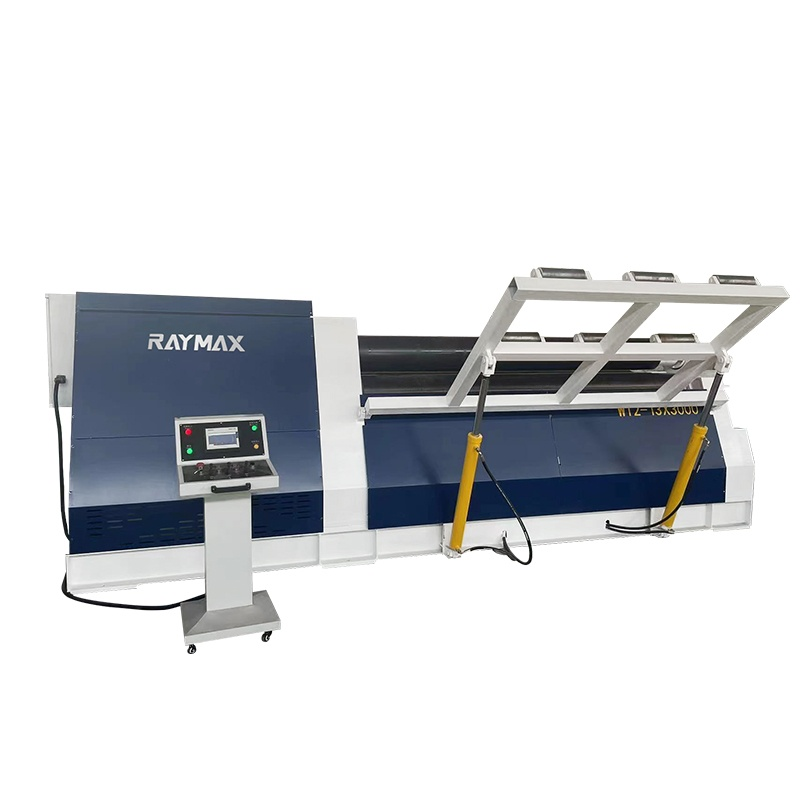
At its structural core, a contemporary rolling machine typically employs a robust three-roll or four-roll symmetric or asymmetric geometric configuration designed to handle diverse plate thicknesses and tensile strengths. The upper roll exerts calibrated downward pressure while the lower and side rolls dictate the precise bending radius through synchronized hydraulic valves and closed-loop feedback systems. During recent factory floor commissioning projects involving heavy-gauge stainless steel cryogenic storage tanks, upgrading to an advanced CNC-controlled rolling setup completely eliminates the traditional requirement for manual pre-bending on plate edges, saving hours of labor per shell. This exceptional mechanical precision ensures uniform contact stress distribution across the entire width of the plate, effectively preventing the dreaded and structurally compromising flat spot phenomenon commonly observed at sheet extremities.
Mastering Conical Rolling: Overcoming Complex Geometrical Challenges
While rolling standard cylindrical shells is a routine procedure for experienced operators, fabricating conical frustums introduces a myriad of intricate multi-axis geometric challenges that test the limits of both operator expertise and machine capability. Conical rolling inherently requires differential surface speeds and precise angular tilting of the lateral bending rolls because the forming radius of a cone varies continuously along its axis from the smaller end to the larger end. In extensive technical audits across diverse international industrial manufacturing plants, shop floor operators frequently encounter material slippage, edge distortion, or structural skewing when attempting to form thick-walled conical transitions without specialized hydraulic tilt mechanisms and real-time position tracking. Utilizing advanced mathematical calculation models for cone development—specifically factoring in neutral axis shift and asymmetrical friction coefficients—fabrication technicians achieve seamless conical transitions for reducers, transitions, cyclones, and heavy-duty industrial hopper assemblies without resorting to primitive manual hammering or thermal distortion.
Navigating Elastic Springback and Advanced Material Behavior
One of the most persistent hurdles encountered in high-precision plate rolling is managing elastic springback—the inherent metallurgical tendency of metal to partially spring back toward its original flat configuration immediately after the external forming load is released. Different metallic alloys, ranging from standard carbon structural steels to high-strength aerospace-grade titanium and specialized aluminum alloys, exhibit vastly different yield strengths, strain-hardening characteristics, and elongation percentages under load. In rigorous workshop testing trials, accurately compensating for springback requires empirical overload bending matrices and algorithmic compensation tables integrated directly into the machine's advanced CNC controller. Leading metallurgical authorities and materials science journals strongly recommend implementing real-time laser angle monitoring sensors to dynamically measure and adjust roll positioning on the fly, ensuring that every rolled cylinder or cone hits its exact inner diameter and circularity specifications on the very first pass, thereby drastically reducing material scrap and production downtime.
Commercial Value and Brand Excellence in Modern Manufacturing Operations
Investing in a high-performance, technologically advanced rolling machine extends far beyond mere technical proficiency on the shop floor; it serves as a primary driver of commercial profitability, operational scalability, and long-term competitive advantage in the global market. Modern automated rolling systems significantly reduce overall production cycle times compared to legacy mechanical units, lowering labor overhead while simultaneously boosting output capacity for demanding manufacturing runs. For enterprises seeking robust, reliable, and future-proof manufacturing ecosystems, partnering with established global industrial machinery suppliers like RAYMAX provides seamless access to cutting-edge heavy machinery, comprehensive engineering support, and optimized supply chain solutions. RAYMAX equips modern fabrication facilities with the exceptional durability, pinpoint accuracy, and superior operational efficiency required to successfully dominate competitive international markets and secure enduring business growth.
Table of Contents
- Understanding Plate Bending Dynamics in Metal Fabrication
- Mechanical Anatomy and Operational Mechanics of Modern Rolling Machines
- Mastering Conical Rolling: Overcoming Complex Geometrical Challenges
- Navigating Elastic Springback and Advanced Material Behavior
- Commercial Value and Brand Excellence in Modern Manufacturing Operations