 EN
EN



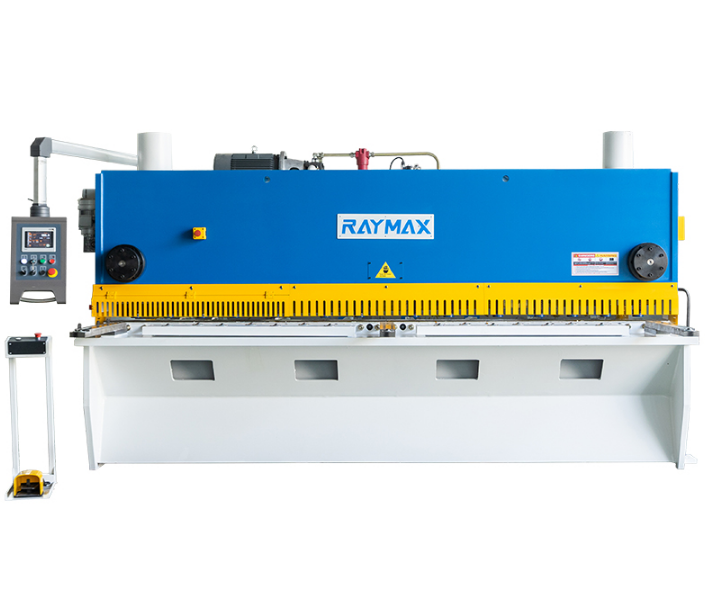
Dimensional Accuracy and Repeatability: Core Precision Metrics
CNC Shearing Machine Tolerance: ±0.1 mm Consistency Across High-Volume Runs
A CNC shearing machine delivers ±0.1 mm repeatability over thousands of cycles—enabled by automated back gauge positioning and closed-loop servo control that corrects for position drift in real time. In contrast, manual systems rely on operator judgment to read a scale and set the stop, introducing variability from the first piece onward. For a job requiring 500 identical blanks, CNC consistency eliminates secondary trimming steps and holds material waste below 0.5%.
| Dimension | CNC Shearing Machine | Manual Back Gauge |
|---|---|---|
| Tolerance | ±0.1 mm | ±0.5–1.0 mm |
| Repeatability | High (automated) | Low (human dependent) |
Manual Back Gauge Variability: ±0.5–1.0 mm Drift Due to Human and Mechanical Factors
Manual back gauges exhibit wide variation due to two interrelated factors: human reading error and mechanical wear. Visual alignment introduces ±0.3 mm parallax error alone; fatigue over a shift further degrades accuracy. Simultaneously, worn leadscrews and loose gibs contribute an additional ±0.2–0.7 mm of drift. The cumulative effect often pushes parts out of specification before the end of a production run—triggering more frequent quality checks, rework, and reduced throughput. A CNC shearing machine avoids these pitfalls entirely with digital positioning and continuous feedback.
How CNC Automation Eliminates Operator-Dependent Error
Closed-Loop Feedback and Real-Time Correction in CNC Shearing Machines
CNC shearing machines eliminate operator-dependent error through integrated closed-loop feedback systems. Servo motors and precision encoders continuously monitor blade position and cutting force. When deviations occur—such as those caused by material hardness variation—the controller instantly compensates, sustaining ±0.1 mm accuracy without intervention. This capability is impossible with manual setups, where operators must visually verify measurements and physically adjust stops. As a result, CNC automation ensures consistent output across shifts and skill levels, directly reducing scrap and improving throughput.
Setup Time, Fatigue, and Skill Gaps in Manual Back Gauge Operation
Manual back gauge operation introduces three compounding error sources: inconsistent setup, fatigue-induced decline in precision, and variability across operator experience levels. Research shows setup variation alone can cause ±0.8 mm drift, as operators interpret scales differently. Physical effort required for repeated adjustments accelerates fatigue, while skill gaps mean novice operators rarely match the consistency of seasoned technicians. CNC systems standardize positioning through programmed workflows—enabling any trained operator to achieve uniform results. This reduces training overhead and stabilizes quality across production cycles.
Calibration, Maintenance, and Long-Term Accuracy Stability
Auto-Calibration and Predictive Diagnostics in Modern CNC Shearing Machines
Modern CNC shearing machines feature auto-calibration systems that actively compensate for thermal expansion and mechanical wear—preserving ±0.1 mm tolerance without manual recalibration. Built-in predictive diagnostics monitor critical components like servo motors and ball screws, automatically flagging maintenance needs before accuracy drift occurs. When validated using ISO 7870-2 compliant control charts, these systems demonstrate long-term stability exceeding 98% over 500+ operating hours. Manual systems lack such safeguards; their accuracy typically degrades beyond acceptable limits within weeks without disciplined recalibration.
Manual Drift Risk: Why Daily Verification Is Necessary—and Often Overlooked
Manual back gauge systems are inherently prone to drift from vibration, thermal fluctuation, and mechanical wear—accumulating 0.5–1.0 mm variance per shift. Without daily verification using calibrated instruments, this drift compounds rapidly into costly dimensional errors. Industry data indicates 63% of manual shear operations skip scheduled verifications due to production pressure, contributing to scrap rates as high as 15%. Unlike CNC systems with automated logging and traceable audit trails, manual processes depend entirely on operator discipline for documentation—a known vulnerability in measurement system stability analysis.