 EN
EN



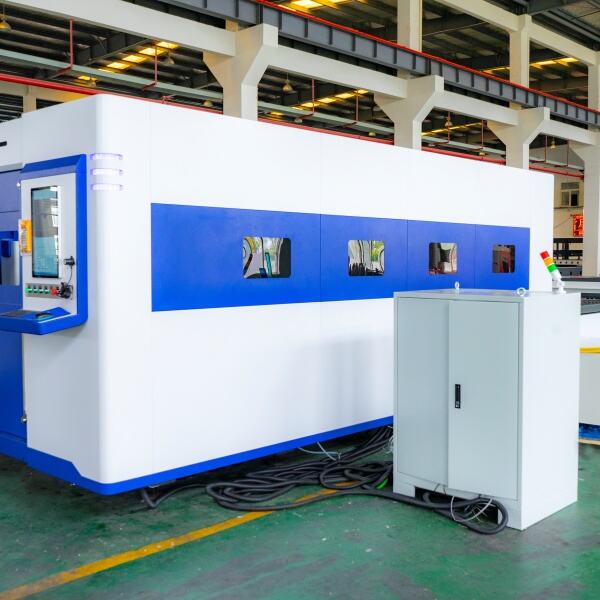
The Evolution of Fiber Laser Cutting and the Rise of Automation
How fiber laser cutting technology has transformed modern manufacturing
Fiber laser cutters are changing how metal gets worked on these days. They cut three times faster than old school CO2 lasers and use 40% less power according to BPIAE research from last year. For shops working with stainless steel, aluminum or copper alloys, this means getting parts made with incredible accuracy down to the micron level. What used to require several separate machining steps can now be done in one go thanks to these machines. When paired with CNC systems, whole production lines have moved away from hands-on work to fully automated digital processes. Sheet metal fabricators report around 18% less scrap material going to waste since making the switch to fiber lasers.
The role of automation in enhancing precision and consistency in cutting operations
Modern laser systems can hit around 0.03 mm repeatability thanks to smart controls that adjust on the fly for things like heat changes and material variations. Robots handle materials consistently throughout the process, and when it comes to setting up these systems, AI makes things much faster - about two thirds quicker than what humans could manage manually. For quality checks, automated inspection units equipped with those CCD cameras spot defects as small as 0.1 mm. This means most parts come out right, somewhere close to 99.7% conformity rate even when running thousands of pieces through the system every day.
Integration of CNC control, robotics, and conveyors for smart factory readiness
Today's fiber laser cutting operations bring together six axis robots, conveyor belts that sort parts automatically, and computer controlled machines connected through the internet of things to form continuous processing cells throughout the factory floor. The whole setup adjusts cutting routes on its own using data from enterprise resource planning systems, works hand in hand with punch presses located earlier in the line, and sends completed pieces straight over to where they get welded next. According to research published last year, when manufacturers implement these kinds of integrated systems, they typically see their work in progress inventory drop around 32 percent. Plus, factories can switch between different products much faster now, sometimes as quick as two hours between setups.
Synergy between fiber laser systems and automation for scalable production
Combining high power fiber lasers (as powerful as 30 kW) with automatic loading systems makes it possible to run operations around the clock without anyone watching, which means much more output without needing extra workers. Systems with dual pallet changers and automatic nozzles keep downtime below 1.5% when running non stop, and smart maintenance software actually makes parts last about 40% longer before they need replacing. What this all adds up to is a system that can handle everything from small test batches of just 1 to 10 items right up to full scale manufacturing of over 10,000 units while still keeping product quality exactly the same throughout.
RAYMAX's Automatic Material Feeding System: Design and Core Components
Operation Process of Auto Feeding Fiber Laser Cutting Machine
Fiber laser cutting machines equipped with automatic feeding systems work according to a specific sequence. Raw material gets fed into the machine using conveyor belts first. Then various sensors come into play, detecting where exactly the metal sheets are positioned and how thick they actually are. The CNC control system takes all this data and adjusts the cutting settings on the fly. What makes these machines so valuable is that they require very little hands-on work from operators yet still manage to cut materials with incredible accuracy around 0.1 mm tolerance. And this happens even when running at impressive speeds of up to 40 meters per minute. For industries like aerospace manufacturing or car part production where tiny measurement differences matter a lot, such precision simply cannot be overlooked.
Suction Cup Feeding Mechanism and Automated Material Handling Design
Suction cups powered by vacuum technology can manage metal sheets as thick as 25 mm without causing any surface distortion. These systems come equipped with pressure controls that automatically adapt depending on what kind of material they're handling stainless steel, aluminum or other metals. When it comes to positioning these sheets correctly, modern machines now feature built-in vision systems that actually read where everything should go. According to recent industry data from Sheet Metal Processing Report in 2023, this automated approach cuts down on wasted materials by about 18% when compared to old fashioned manual methods. Another real advantage is how these mechanisms rotate fully around 360 degrees, which makes retrieving parts from complicated shapes much easier during production runs.
Dual Exchange Table Design for Uninterrupted, Continuous Processing
With a twin table setup, manufacturers can load materials while cutting is happening at the same time, which gets equipment running at nearly full capacity even during round-the-clock production. When one table is busy with actual cutting work, the other moves fresh material into position automatically thanks to those precision linear servos that repeat within about half a thousandth of a millimeter. What this really does is cut out all that wasted time waiting for loads to be placed manually something that used to take around 15 to 20 minutes every hour. Factories report seeing their output jump anywhere from roughly 35 to almost 40 percent higher after making the switch to this kind of system according to several industry reports.
From Stack to Cut: Streamlining Material Preparation and Flow
Stack lifters that are automated take sheets right off storage pallets and onto the conveyor belt, keeping material alignment pretty consistent with less than 2% variation when moving things around. Thickness sensors work in real time to adjust clamping pressure between about 300 Newtons all the way up to 3,000 Newtons depending on what's needed, which stops materials from slipping while they're being cut at high speeds. When everything works together seamlessly like this, preparing materials takes far less time too. Instead of waiting 45 whole minutes for setup, most batches are ready in just under 90 seconds now.
Key Benefits of Automation in Fiber Laser Cutting Operations
Reduced Labor Dependency and Enhanced Workplace Safety in High-Volume Environments
Fiber laser cutting machines that are automated take care of most tasks without needing much human help. They handle things like loading materials, getting them aligned properly, and sorting through different pieces using robotic arms and those suction cups we all know about. According to some industry reports from last year, places that implemented this tech saw around 40% less need for people to handle sheets manually, which obviously cuts down on injuries especially where there's lots of production going on. What happens next is interesting too operators don't just lose their jobs but actually move into monitoring positions instead. This shift saves money on labor expenses and makes it easier to follow safety rules at work since there's less direct contact with machinery involved.
Shorter Lead Times and Faster Delivery Through 24/7 Uninterrupted Operation
Dual exchange tables and automated material feeders enable continuous production cycles, allowing manufacturers to achieve 20% faster order fulfillment compared to manual systems. Non-stop operation eliminates shift changeover delays, making automated machines ideal for industries requiring just-in-time delivery like automotive and aerospace.
Long-Term Cost Savings via Minimized Downtime, Waste, and Energy Use
Automation drives 30% lower energy consumption through optimized laser power modulation and reduced idle time. Predictive maintenance systems prevent unplanned downtime by flagging component wear before failure. Material waste drops to under 2% due to precision nesting algorithms, as shown in a 2024 Metal Fabrication Efficiency Study.
Improved Cutting Efficiency With Real-Time Monitoring and Adaptive Controls
Modern systems automatically adjust focal length and gas pressure when cutting thickness varies between 0.5-30 mm. Integrated sensors track cutting head temperature and beam quality, maintaining ±0.01 mm accuracy across 10,000+ cycles. This closed-loop control enables 15% better material utilization than manual setups.
Integrating Fiber Laser Cutting Machines into End-to-End Factory Automation
Achieving seamless CNC integration with upstream and downstream equipment
Today's fiber laser cutting machines work seamlessly with both the material storage areas before them and the finishing systems that come after, thanks to sophisticated CNC technology. When these laser cutters are connected to robotic arms, conveyor belts, and inspection equipment, factories can do away with those tedious manual handoffs between different parts of production. The result? A fully automated system that cuts down on mistakes made by people. According to recent industry data from Machine Tool Analytics in 2023, this kind of setup actually reduces human errors by around 32% when compared to older semi-automated methods. Plus, operators get real time control over cutting settings as materials move through the system, adjusting automatically for things like varying thicknesses or potential backups further along the line.
Connecting laser systems with MES, ERP, and software platforms for full workflow control
When fiber laser cutting machines get connected to manufacturing execution systems (MES) and enterprise resource planning (ERP) software, they stop being just isolated pieces of equipment and start generating valuable production data instead. These connections work through IoT sensors that track important stuff like cutting speeds, how much energy is used, and when tools are wearing out. All this information goes to central dashboards where it helps predict when maintenance might be needed before breakdowns happen. According to Automation Engineering Journal from last year, this kind of setup can cut down on unexpected machine stoppages by around 41%. Another big plus comes from machine learning algorithms looking at past job data to figure out better ways to arrange parts on materials. For sheet metal work specifically, companies have seen their material usage improve between 6 to 9 percent thanks to these automated layout optimizations.
Case study: Leading manufacturer’s system integrated with warehouse logistics and production planning
One major automotive parts manufacturer recently managed full operation around the clock using laser cutting machines linked to automated warehouses and real time part sequencing systems. When metal sheets arrive at the loading zone, RFID tags on stacked materials automatically start the laser cutting process. Finished pieces then go straight to robotic assembly lines without any manual intervention. According to Smart Factory Report from last year, this setup slashed handling times by almost three quarters and virtually eliminated logistical mistakes. For companies dealing with complex product mixes, such tightly integrated automation setups clearly offer substantial returns on investment compared to traditional manufacturing approaches.
Measuring Performance: Efficiency Gains from Automated Fiber Laser Cutting
Cutting Speed and Operational Efficiency Under Automatic Feeding Conditions
Automated material feeding systems increase processing speeds by 30-50% compared to manual operations in fiber laser cutting machines. Real-time adaptive controls adjust cutting parameters to maintain peak speeds of 6.8 m/min even with complex geometries, while collision detection sensors prevent downtime from misaligned sheets.
Data Comparison: Manual vs. Automatic Loading/Unloading System Performance
| Metric | Manual System | Automated System | Improvement |
|---|---|---|---|
| Processing Speed | 4.5 m/min | 6.8 m/min | +51% |
| Error Rate | 12% | 3% | -75% |
| Material Waste | 8% | 2.5% | -69% |
These industry benchmarks highlight how automated loading eliminates human measurement errors and accelerates cycle times.
Uptime Improvement From 65% to Over 90% With Automation Upgrades
Continuous feeding mechanisms and dual exchange tables reduce non-cutting time by 72%, enabling 24/7 production capabilities. Predictive maintenance algorithms minimize unexpected stops, achieving 92% uptime in high-volume automotive part manufacturing environments.
FAQ
What are the main benefits of using fiber laser cutting over CO2 lasers?
Fiber laser cutters are significantly faster and more energy-efficient than CO2 lasers, using 40% less power and delivering three times the cutting speed.
How does automation enhance fiber laser cutting operations?
Automation provides precision and consistency, reduces scrap material, minimizes human error, and supports continuous production through mechanisms like dual exchange tables and automatic feeding systems.
What role do CNC and robotics play in modern laser cutting operations?
CNC and robotics are crucial for maintaining consistency and precision in laser cutting. They automate the processes of handling, loading, and cutting, allowing for higher output and reduced errors.
How do automated fiber laser systems contribute to cost savings?
These systems reduce labor costs, minimize energy usage, prevent material waste, and decrease downtime through predictive maintenance and efficiency improvements.
Table of Contents
-
The Evolution of Fiber Laser Cutting and the Rise of Automation
- How fiber laser cutting technology has transformed modern manufacturing
- The role of automation in enhancing precision and consistency in cutting operations
- Integration of CNC control, robotics, and conveyors for smart factory readiness
- Synergy between fiber laser systems and automation for scalable production
- RAYMAX's Automatic Material Feeding System: Design and Core Components
-
Key Benefits of Automation in Fiber Laser Cutting Operations
- Reduced Labor Dependency and Enhanced Workplace Safety in High-Volume Environments
- Shorter Lead Times and Faster Delivery Through 24/7 Uninterrupted Operation
- Long-Term Cost Savings via Minimized Downtime, Waste, and Energy Use
- Improved Cutting Efficiency With Real-Time Monitoring and Adaptive Controls
- Integrating Fiber Laser Cutting Machines into End-to-End Factory Automation
- Measuring Performance: Efficiency Gains from Automated Fiber Laser Cutting
- FAQ