 EN
EN



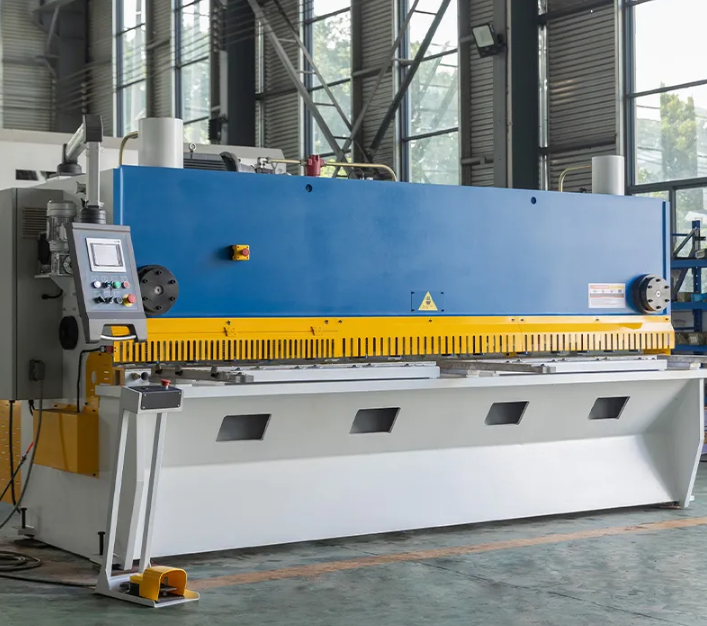
Visible Blade Degradation: The First Physical Warning
Chipping, Curling, and Edge Collapse as Reliable Visual Signs
Chipping, curling, and edge collapse are the most immediate and reliable visual indicators of shearing machine blade degradation. These defects compromise structural integrity, increase friction, and erode cutting precision. Consistent chipping signals advanced material fatigue; edge curling accelerates wear propagation and promotes uneven loading. Left unaddressed, they risk secondary damage to blade holders, guides, and hydraulic components—and directly undermine part consistency. Operators observing these signs report up to 22% higher force requirements (Machinery Maintenance Journal 2024). A disciplined visual inspection routine—documenting progression over time—is essential for proactive replacement planning.
Why Surface Inspection Alone Isn’t Sufficient — When to Use Precision Measurement
Surface inspection catches obvious flaws but misses subsurface deterioration that critically impacts performance—such as micro-fractures, internal stress concentrations, or progressive edge thinning. These hidden issues often manifest functionally first: dimensional drift in cut parts, inconsistent clearance, or unexplained burr formation—despite “clean-looking” blades. Precision measurement tools detect what the eye cannot:
| Measurement Tool | Detected Issue | Replacement Threshold |
|---|---|---|
| Micrometer | Edge thinning | >0.5mm material loss |
| Surface tester | Micro-fractures | >15% hardness drop |
| Laser alignment | Blade warping | >0.2mm deviation |
When cut quality fluctuates despite normal visual inspection, deploying these diagnostics is critical. Plants using integrated precision measurement reduce unplanned downtime by 37% compared to visual-only protocols (Industrial Engineering Review 2023).
Declining Cut Quality: Burrs, Deformation, and Dimensional Inaccuracy
Dull shearing machine blades shift from clean shearing to tearing—pushing rather than separating material. This mechanical failure generates sharp burrs, edge deformation, and micro-warping, especially in thinner gauges (<3mm). Burrs exceeding 0.05mm height pose safety hazards in consumer-facing products and frequently jam automated downstream equipment. Simultaneously, uneven force distribution induces dimensional drift beyond ±0.1mm tolerances—causing fit failures, manual rework, or scrap. Aluminum and stainless steel are particularly vulnerable due to their ductility and work-hardening behavior under compromised shear conditions.
How Dull Shearing Machine Blades Cause Burred Edges and Material Warping
As blade edges degrade, they lose the acute geometry needed for controlled material separation. Instead, they crush and tear near the cut line—forcing metal upward or downward to form burrs. Severity escalates with wear: mildly dull blades produce fine, controllable burrs; severely degraded edges yield ragged, multi-directional projections requiring deburring. Asymmetric wear or misalignment compounds the issue, applying unbalanced lateral force that bends or distorts thin sheets during cutting—especially near free edges. This results in warped sections failing flatness specifications, often necessitating costly flattening or rejection.
Measuring Precision Loss: Slag, Tolerance Drift, and Rejection Rate Trends
Quantifying cut quality decline requires objective metrics—not just observation. Slag, the torn, jagged residue clinging to the underside of the cut, increases predictably with blade wear and serves as a direct, field-observable indicator. More critically, track dimensional tolerance drift using calipers or Coordinate Measuring Machines (CMMs), focusing on edge straightness, kerf width consistency, and positional accuracy of features adjacent to cuts. Finally, analyze rejection rate trends in Quality Assurance (QA): a sustained rise in parts rejected for burrs, deformation, or out-of-tolerance dimensions correlates strongly with blade wear progression—and provides a clear, data-driven trigger for replacement before delivery schedules are impacted.
Reduced Operational Efficiency: Speed, Force, and System Stress
Hydraulic Pressure Spikes and 18–22% Higher Load as Wear Signatures
Dull blades demand significantly greater cutting force—translating into measurable hydraulic pressure spikes and an 18–22% increase in average system load. This forces pumps, valves, and motors to operate outside design parameters, accelerating wear across the entire hydraulic circuit. Cycle times lengthen as machines struggle to complete cuts, and energy consumption rises proportionally. Critically, these efficiency losses often precede visible cut defects—making hydraulic load monitoring one of the earliest and most actionable indicators of blade degradation. Integrating real-time pressure and load tracking into preventive maintenance routines enables timely intervention, avoiding cascading component failures and unplanned downtime.
Safety and Reliability Risks: From Jamming to Catastrophic Failure
Excessively dull blades fail to sever material cleanly, causing it to pinch or hang between the upper and lower blades. This jamming imposes extreme, localized stress on the blade holder, frame, and hydraulic system. If unresolved, jams can trigger sudden blade fracture—or violent flyback of fractured metal fragments. Operators face serious injury risks from ejected debris or uncontrolled machine movement. Repeated jamming also sustains elevated hydraulic pressure, increasing the likelihood of seal rupture, pump damage, or, in worst cases, hydraulic line burst or blade detachment. Catastrophic failure rarely occurs without warning: it follows a pattern of ignored jamming events. Run-to-repair strategies are especially hazardous here—the failure mode is unpredictable and inherently violent. Consistent blade inspection and scheduled replacement eliminate this risk entirely, safeguarding both personnel and equipment.
Inconsistent Output Despite Stable Settings: The Hidden Blade Wear Trap
When speed, clearance, feed rate, and other process parameters remain unchanged—but output quality fluctuates—teams often misdiagnose the root cause as process drift. They recalibrate sensors, adjust material handling, or retrain operators while overlooking the silent variable: gradual blade wear. Because machine controls display stable settings, tool degradation remains invisible until yield losses become severe.
Why QA Teams Mistake Blade Degradation for Process Drift
Blade wear progresses incrementally—often too slowly for daily visual checks or pass/fail inspections to catch. Operators may notice early burrs or slight dimensional shifts but assume the process has drifted and respond by adjusting pressure or blade gap. These compensatory tweaks temporarily restore surface-level quality while masking underlying wear—and ironically accelerate deterioration by forcing the blade to operate outside optimal parameters. Over time, such adjustments introduce noise into process data and obscure true root causes. Yield data—specifically, the number of consistent, defect-free cuts before rejection rates spike—reveals the pattern. When stable settings produce erratic results, historical analysis of cut count versus rejection rate separates genuine process instability from blade degradation—enabling QA teams to intervene before production is disrupted.
Table of Contents
- Visible Blade Degradation: The First Physical Warning
- Declining Cut Quality: Burrs, Deformation, and Dimensional Inaccuracy
- Reduced Operational Efficiency: Speed, Force, and System Stress
- Safety and Reliability Risks: From Jamming to Catastrophic Failure
- Inconsistent Output Despite Stable Settings: The Hidden Blade Wear Trap