 EN
EN



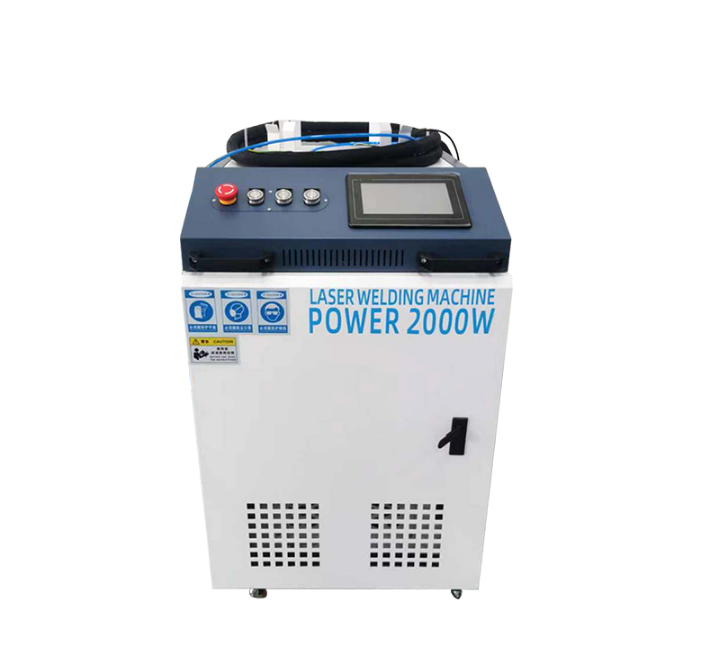
Core Technological Advancements in Fiber Laser Cutting Machine Performance
Adaptive optics for real-time thermal lensing correction and ±0.02 mm positional accuracy
Modern fiber laser cutting machines incorporate adaptive optics systems that actively monitor and compensate for thermal lensing—heat-induced focal shifts that degrade beam quality during prolonged operation. Using high-speed algorithms to control deformable mirrors, these systems maintain consistent beam focus and deliver positional accuracy within ±0.02 mm across full production cycles. This eliminates the need for manual recalibration mid-run, reducing unplanned downtime by up to 17% (2023 Manufacturing Efficiency Benchmark Report). The capability is especially critical when cutting highly reflective materials like copper and brass, where thermal instability has historically compromised edge consistency and repeatability.
Dynamic beam-shaping enabling optimal focus diameters (25–150 µm) across material thicknesses
Dynamic beam-shaping technology allows operators to programmatically adjust focus diameter from 25 to 150 µm without swapping optics—enabling precise energy density tuning for each application. Controllers automatically select beam profiles based on material type and thickness, pairing them with adaptive pulse modulation to suppress taper in angled features and maintain uniform kerf width. Industry validation shows kerf variance of ≤5 µm across mixed-material batches, significantly lowering secondary finishing needs and improving dimensional fidelity in precision components.
High-power evolution: 12-kW fiber lasers delivering 40 m/min on 3-mm stainless steel
The latest 12-kW fiber laser systems achieve 40 meters per minute on 3-mm stainless steel—doubling the speed of 6-kW platforms introduced just five years ago. This power advancement enables single-pass cutting of 30-mm carbon steel while meeting Class I edge quality standards per ISO 9013. Crucially, energy consumption per meter cut has decreased by ~22% despite higher output, thanks to improved diode efficiency and thermally optimized resonator designs (2023 Global Laser Energy Efficiency Survey). These systems also feature redundant pump diodes and advanced liquid-cooling architectures, sustaining 98.5% uptime in continuous 24/7 operation.
Smart Automation and Software Integration for Fiber Laser Cutting Machine Efficiency
Robotic loading/unloading cells reducing manual handling by 67% per shift
Integrated robotic loading and unloading cells automate sheet placement and part removal, cutting manual handling by 67% per shift. This shift in labor allocation allows operators to supervise multiple machines simultaneously while ensuring repeatable positioning—reducing setup errors and boosting throughput. In high-volume environments, these cells support true lights-out operation, extending productive runtime and improving machine utilization without proportional increases in staffing or supervision overhead.
AI-powered nesting software improving sheet utilization by 11–14% through geometry-aware optimization
AI-driven nesting software analyzes part geometry, orientation constraints, and material grain direction to generate layouts that maximize sheet yield. Its geometry-aware optimization improves utilization by 11–14% over traditional manual or rule-based methods—directly reducing scrap volume and supporting sustainability targets. The system learns from historical cutting data and refines its strategies over time, adapting to evolving part portfolios. When synchronized with real-time process feedback, it dynamically adjusts parameters to preserve cut quality at higher material efficiency.
Material-Specific Optimization Across Common Sheet Metals
Aluminum: Pulse modulation strategies eliminating dross on EN AW-5083 up to 15 mm
Cutting aluminum alloys such as EN AW-5083 demands precise thermal management due to their high reflectivity and thermal conductivity. Modern fiber laser systems apply tailored pulse modulation—adjusting peak power, pulse duration, and frequency—to ensure clean vaporization rather than melting. This approach consistently eliminates dross formation on sheets up to 15 mm thick, yielding smooth, oxide-free edges suitable for structural aerospace and automotive applications without post-processing.
Stainless steel and mild steel: Gas pressure and focal position tuning for burr-free edge quality
Burr-free edge quality on stainless and mild steel relies on coordinated control of assist gas pressure and focal position relative to the workpiece surface. For stainless steel, high-purity nitrogen at elevated pressures expels molten material cleanly, minimizing recast and oxidation. Mild steel benefits from oxygen-assisted cutting at lower pressures, balancing exothermic reaction control with reduced heat-affected zone (HAZ) expansion. Simultaneously, dynamic focal positioning—adjusted in real time based on material thickness and thermal response—ensures optimal energy coupling, eliminating drag lines and ensuring edge squareness across varying gauges.
Precision Assurance: In-Line Quality Control and Metrology Integration
Modern fiber laser cutting machines achieve sub-10 µm geometric accuracy through integrated inline metrology systems that monitor the cutting process in real time—closing the loop between measurement and correction before deviations propagate.
Vision-Guided Kerf Monitoring With Auto-Compensation for ±2.5 µm Tolerance Compliance
High-resolution vision systems mounted adjacent to the cutting head capture kerf width and edge geometry at millisecond intervals. Machine-vision algorithms detect deviations as small as 1 µm—whether caused by thermal drift, gas pressure fluctuation, or material inconsistency—and trigger automatic corrections to focal position, laser power, or feed rate. This closed-loop compensation maintains cuts within a ±2.5 µm tolerance band, eliminating offline inspection for most parts. The result is accelerated first-article approval, consistent edge quality across long runs, and measurable reductions in scrap and rework.
Total Cost of Ownership and ROI for Fiber Laser Cutting Machine Investment
Calculating the true lifetime expense of a fiber laser cutting machine requires looking beyond the initial purchase price. A typical 6‑kW system carries a total five‑year cost of ownership between $180,000 and $220,000—covering the machine, installation, electricity, assist gases, consumables, and routine maintenance. That figure is 40–50% lower than the equivalent CO₂ laser system, primarily due to superior electrical efficiency (fiber lasers convert >40% of input power into usable beam energy), fewer moving parts, and minimal consumable replacement costs. For shops currently outsourcing cutting, bringing the process in-house with a fiber laser can generate annual savings of $88,000—achieving payback in roughly 10 months. Faster throughput on thin materials (e.g., 40 m/min on 3‑mm stainless steel) further compresses this window. Ultimately, ROI scales directly with production volume, material mix, and how fully automation and intelligent nesting features are leveraged.
Table of Contents
- Core Technological Advancements in Fiber Laser Cutting Machine Performance
- Smart Automation and Software Integration for Fiber Laser Cutting Machine Efficiency
- Material-Specific Optimization Across Common Sheet Metals
- Precision Assurance: In-Line Quality Control and Metrology Integration
- Total Cost of Ownership and ROI for Fiber Laser Cutting Machine Investment