 EN
EN



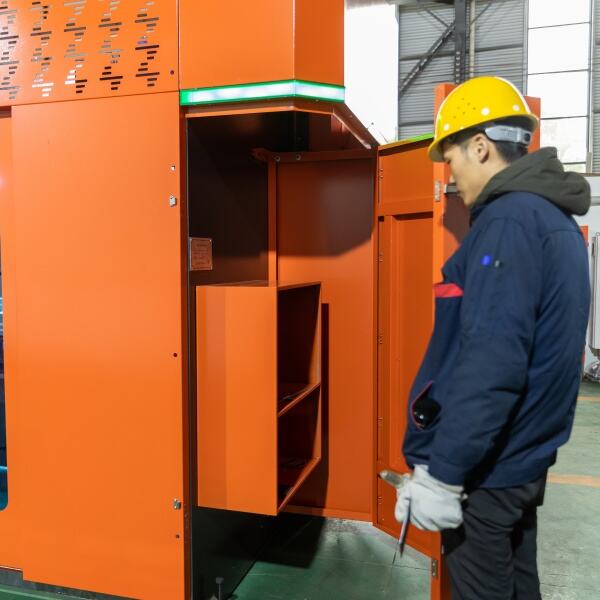
The Role of CNC Press Brake in Modern Fabrication Workflows
The introduction of CNC press brakes has completely changed how metal gets bent in fabrication shops, moving away from old school manual techniques toward something much more precise through programming. What these machines do is handle several critical aspects automatically including where the back gauge sits, what angle needs bending, and how hard the ram pushes down. This makes for pretty consistent results even when dealing with lots of different parts all at once. Take a look around any modern manufacturing facility and chances are good they're using CNC technology. The aerospace and auto industries especially depend on this stuff because it cuts down on mistakes made by humans. They can hit those tight specs down to about plus or minus 0.1 degrees consistently, which matters a lot when making complicated components that need to fit together perfectly every single time.
Defining Complex Bending Operations and Their Programming Challenges
Complex bending involves multi-stage sequences where small miscalculations can lead to significant errors. Key challenges include:
- Collision avoidance between tooling and workpiece during multi-axis movements
- Compensating for material springback, especially in high-strength alloys
- Sequencing bends to prevent interference with previously formed features
Even a single asymmetrical or radius bend may require over 30 program adjustments to account for tool deflection and deformation, demanding both precision and foresight in programming.
Rising Demand for Precision in Multi-Stage Bends
Lightweight and compact design requirements have really ramped up the need for those multi stage bends that need to be accurate down to fractions of a millimeter. According to a survey from last year, about two thirds of metal fabricators are dealing with parts that require at least five different bending steps every week. That's actually a pretty big jump from just three years ago when this number was only around 56%. Because of this growing demand, many shops are starting to implement these real time feedback systems. These advanced setups measure bend angles using lasers and then automatically tweak the program settings while the machine is running. The results speak for themselves too. Shops report cutting their rework rates by almost half compared to old fashioned methods where workers had to constantly stop and check their work manually.
Mastering Bend Sequencing and Collision Avoidance in Complex Geometries
Principle: Logical Bending Order Planning for Collision Avoidance
Good CNC programming really begins with figuring out the right bend sequence for each job. When looking at parts, operators need to assess their shape and decide on an order that keeps tools from crashing into the workpiece while still maintaining accurate dimensions. Take those multi-flange components for instance. If someone reverses the bending order, the tooling gets stuck between bends and causes problems for both the finished product and expensive machinery. Sure, today's software does help visualize these sequences, but nobody can replace actual human judgment yet. Industry data shows around one quarter of all collision issues come down to missed geometry conflicts that even the best programs sometimes miss.
Case Study: Optimizing Bend Sequence in a Box With Asymmetrical Flanges
When making stainless steel enclosures with those tricky offset flanges, one manufacturer had problems at first. They tried the usual left to right bending approach but kept running into three collision points during production. After some trial and error, the team changed things around by focusing on the center bends first and tweaking how the tools were positioned. This simple adjustment completely got rid of the collisions, cut down setup time by about 40 percent, and saved money on wasted materials too. What this shows is that when dealing with parts that aren't symmetrical, manufacturers need to think outside the box instead of just following standard procedures without question.
Strategy: Using Offline Programming (OLP) and 3D Simulation for Error Reduction
With offline programming (OLP), engineers can actually see how bends will work out in three dimensions long before any metal gets touched on the shop floor. The software does all sorts of collision checks behind the scenes and comes up with different routing options when needed, which matters a lot when dealing with tight specs below plus or minus 0.25 millimeters. Better systems now have these fancy springback prediction features built right in. They figure out what angles need adjusting while the program is being written rather than waiting until after the part has been made. This means fewer rejects on the first run through the machine, saving both time and material costs in real world manufacturing situations.
Programming Techniques for Bumping, Radius Bends, and Springback Compensation
Calculating Bend Angles and Segments for Smooth Curves
Precision begins with accurate calculation of bend angles and segment lengths. Material thickness, bend radius, and springback behavior dictate these parameters. For instance, forming a 120 ° arc using six segments requires 20 ° per hit. Proper segmentation reduces stress concentration and ensures smooth, dimensionally stable curves.
Programming Parameters for Bumping (Radius, Angle, Segments)
Bumping—multi-hit bending to form radii—requires careful parameter selection to avoid surface defects. Critical variables include:
- Radius: Determined by punch tip geometry
- Angle per segment: Typically 5 °–15 °, based on material ductility
- Overlap percentage: 15%–30% between hits for seamless transitions
Thicker materials like 10mm steel often require 8–12 hits for a 90 ° bend, whereas thin aluminum sheets may achieve smooth results in just 3–5 passes.
Achieving Smooth and Gradual Bends Through Incremental Forming
Modern CNC press brakes support incremental forming, combining shallow-angle bends with positional accuracy down to ±0.01mm. This method distributes forming stresses across multiple micro-hits, making it ideal for:
- Aerospace components needing Class A surface finishes
- Architectural elements with visible curves
- High-strength alloys prone to cracking in single-stage bending
Understanding Springback Compensation in Programming
Springback is a primary challenge in precision bending. Cold-rolled steel typically recovers 1 °–3 ° elastically, while 304 stainless steel can rebound 3 °–5 °. Effective compensation strategies include:
- Overbending: Programming angles 2 °–5 ° beyond the target
- Bottoming: Applying 150%–200% of calculated tonnage to ensure plastic deformation
- Multi-stage correction: Combining initial overbend with secondary flattening hits
Trend: Real-Time Feedback Systems Integrating Laser Measurement for Adaptive Correction
Leading manufacturers now deploy hybrid systems that integrate CNC programming with laser scanners measuring actual bend angles during forming. These closed-loop systems automatically adjust subsequent hits, achieving 99.7% first-pass accuracy in trials—a 63% improvement over conventional methods.
Precision Setup: Backgauge Positioning and Bend Allowance Calculations
Using Bend Allowance and Compensation in CNC Press Brake Programming
Getting bend allowance right is pretty much essential when working on precision parts. The calculation basically tells us how much the material will deform when bent, which keeps things consistent across multiple stages of production. When setting up compensation, we need to consider factors like sheet thickness, bend radius, and that pesky springback effect. Shops that track their past bend data see real benefits too. One study found around a 20% drop in trial runs for complicated shapes, which means faster turnaround times and fewer surprises down the line.
Calculating Backgauge Positions to Prevent Repositioning Errors
Reliable backgauge calibration depends on three factors:
- Material edge consistency (±0.1 mm tolerance)
- Tooling centerline alignment
- Logical sequencing of bend positions
Operators should conduct test bends with indicator shims to verify accuracy before full production. Advanced CNC systems now feature real-time laser tracking that automatically adjusts backgauge positions during multi-axis operations, minimizing drift and misalignment.
Data-Backed Setup Optimization
A 2022 Fabricating & Metalworking study revealed that 43% of setup errors originate from incorrect backgauge calibration. This emphasizes the need for standardized verification protocols, especially when switching materials or tooling. Modern CNC press brakes mitigate these risks with automatic compensation algorithms that adapt positioning based on measured springback and thickness variations.
Optimizing Workflow with Offline Programming and CNC Integration
Press Brake Programming Mindset and Workflow Optimization
Successful CNC press brake programming hinges on a preventive mindset. Operators should analyze part geometry, tooling constraints, and material properties before generating sequences. This proactive approach reduces material waste by up to 22% compared to reactive methods, ensuring higher yield and operational efficiency.
Offline Programming (OLP) and 3D Simulation for Reducing Machine Downtime
OLP software enables engineers to develop and validate collision-free programs off-machine. 3D simulations verify tool paths, clamp placements, and backgauge movements, identifying interference risks early. Facilities using OLP report 50–70% faster setups than those relying on on-machine programming, significantly boosting throughput.
CNC Program Integration with Setup Processes for Seamless Transitions
Integrated tool libraries and preset databases synchronize with CNC programs to eliminate manual input errors. When loading a new job, the system automatically recalls:
- Required tooling specifications
- Pre-configured bend allowances
- Calibrated crowning profiles
This seamless integration cuts changeover time by 40% while maintaining consistency across batches, supporting agile, high-precision production.
FAQ Section
What is a CNC press brake?
A CNC press brake is a machine used in metal fabrication that is controlled by computer programming to bend sheet metal and plate materials accurately and efficiently.
How does a CNC press brake improve bending operations?
The CNC press brake automates crucial aspects like back gauge positioning and ram pressure, ensuring precision and consistency in bending operations and reducing the likelihood of human errors.
What are the challenges in programming complex bending operations?
Challenges include avoiding collisions between tooling and workpieces, compensating for material springback, and sequencing bends to prevent interference with previously formed features.
How is offline programming used in CNC press brake operations?
Offline programming allows engineers to simulate and debug bending sequences before execution, reducing errors and improving efficiency by verifying tool paths and bend sequences using 3D simulations.
What techniques are used to compensate for springback in metals?
Compensation techniques include overbending, bottoming (applying excess tonnage), and multi-stage correction to adjust for elastic rebound after a bend.
Table of Contents
- The Role of CNC Press Brake in Modern Fabrication Workflows
- Defining Complex Bending Operations and Their Programming Challenges
- Rising Demand for Precision in Multi-Stage Bends
- Mastering Bend Sequencing and Collision Avoidance in Complex Geometries
-
Programming Techniques for Bumping, Radius Bends, and Springback Compensation
- Calculating Bend Angles and Segments for Smooth Curves
- Programming Parameters for Bumping (Radius, Angle, Segments)
- Achieving Smooth and Gradual Bends Through Incremental Forming
- Understanding Springback Compensation in Programming
- Trend: Real-Time Feedback Systems Integrating Laser Measurement for Adaptive Correction
- Precision Setup: Backgauge Positioning and Bend Allowance Calculations
- Optimizing Workflow with Offline Programming and CNC Integration
- FAQ Section