 EN
EN



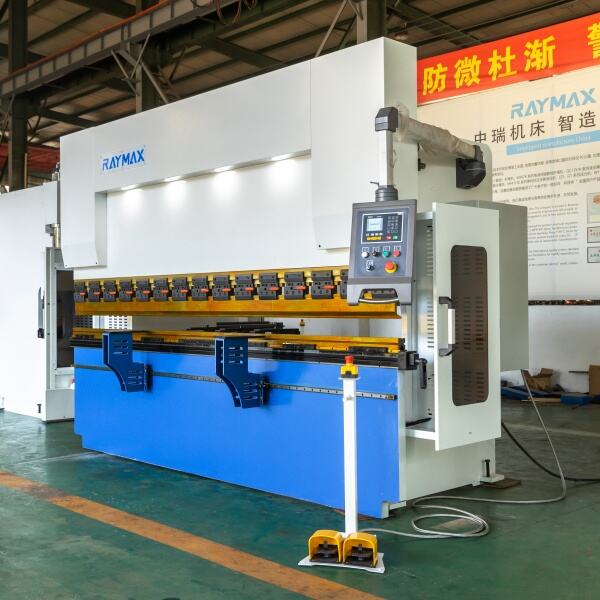
How Hydraulic Press Brakes Work and the Role of Dual-Cylinder Systems
Working Principle of Hydraulic Press Brakes
Hydraulic press brakes work by turning electrical power into mechanical force through pressurized fluids. They rely on what's called Pascal's Principle, where pressure applied to oil in a sealed system gets passed around evenly, which allows for force multiplication. Take a modest 20-ton pump for example it can actually create well over 200 tons of bending power when the cylinders are designed properly. When the machine operates, the ram comes down smoothly and consistently, squeezing sheet metal between the top punch and bottom die. Modern systems can hit pretty impressive angular accuracy too, often within about plus or minus 0.1 degrees, making them suitable for precision manufacturing tasks across various industries.
Key Components: Pump, Cylinder, Valve, Tank, and Ram
Five core components ensure reliable operation:
- Hydraulic Pump: Draws oil from the reservoir and pressurizes it to 70–700 bar.
- Cylinders: Transform hydraulic pressure into linear motion, producing approximately 1 kN of force per 7 bar of pressure.
- Control Valves: Direct oil flow and regulate ram speed with millimeter-per-second precision.
- Oil Tank: Stabilizes temperature (±2°C) to maintain consistent fluid viscosity.
- Ram: Delivers force to the workpiece via hardened steel surfaces rated for 10,000+ cycles.
These elements function in synchronized harmony, with modern setups incorporating real-time pressure sensors to enhance efficiency and reduce energy loss.
Why Dual-Cylinder Drive Enhances System Balance and Control
Dual cylinder systems tackle those pesky force imbalance issues found in single cylinder setups by spreading the workload evenly between two actuators. According to research from Ponemon in 2023, this approach cuts down on lateral deflection by as much as 72%, which means pressure gets distributed more uniformly across the whole bed area. When manufacturers implement closed loop synchronization through servo valves plus positional feedback mechanisms, they can keep tonnage deviations under 1.5% even when dealing with loads over 3,000 tons. For industries like aerospace and automotive production, maintaining such tight tolerances matters a lot. Components need to stay within a bend range of just 0.05 mm for them to last longer and resist wear better. Think about aircraft parts or car frames – getting those measurements right makes all the difference in product quality and safety.
Dual-Cylinder Synchronization: Precision Engineering for Consistent Force Output
Design and Integration of the Dual-Cylinder System
The system uses twin hydraulic cylinders positioned evenly on either side of the ram. These share the same pump and reservoir setup but each has its own separate valve circuit for control. The way these work together creates balanced pressure distribution throughout the frame structure. Tests show this arrangement cuts down sideways movement by about 34 percent when compared with older single cylinder designs according to research published by Yang and colleagues back in 2022. Looking at what makes these systems durable, we find several important components worth mentioning. The piston rods are made from hardened steel rated at least HRC 45 hardness level. Also there are specially sized gland seals designed specifically to handle extreme forces well beyond 1500 tons before showing any sign of wear or distortion.
Hydraulic Flow Dynamics and Energy Conversion in Dual-Cylinders
When working with dual cylinder configurations, the hydraulic fluid actually obeys what we call Pascal's principle, distributing pressure equally across both cylinders as the oil flows through them. These systems rely on really accurate flow divider components that keep the volume differences under control, typically maintaining errors well below half a percent. The efficiency numbers are pretty impressive too. When extending, around 89 to 92 percent of the energy gets converted properly, while special three stage cooling systems take care of any extra heat generated. Field testing has demonstrated something quite remarkable about these setups. They cut down those sudden power surges by roughly 40 percent when running fast forming operations. This means motors last longer and the whole manufacturing process runs much smoother without all those disruptive energy peaks messing things up.
Synchronization Mechanisms: Open-Loop vs. Closed-Loop Control
Two primary control methods are used:
- Open-loop systems rely on gear-type flow dividers for fixed displacement ratios, offering cost-effective solutions for consistent, low-dynamic loads.
- Closed-loop systems use servo valves paired with position sensors (LVDT or magnetostrictive types) to dynamically correct deviations in real time.
According to a 2022 study in Machines, closed-loop configurations achieve ±0.15mm positioning accuracy, significantly outperforming open-loop systems (±1.2mm), making them ideal for high-tolerance applications like aerospace component fabrication.
Minimizing Misalignment and Tonnage Deviation Through Precision Valving
These electro proportional valves respond incredibly fast, around 5 milliseconds, which means they can spot and fix any angular mismatch issues in the ram pretty much instantly, even if there's a tilt of up to half a degree. When paired with pressure sensors that are super accurate at 0.1% full scale measurement, the system keeps everything balanced between the two cylinders. This results in consistent tonnage output throughout production runs, staying within plus or minus 1.5%. The valve blocks themselves are made from forged steel and come with diamond coated spools inside. This combination really extends how long they last before needing replacement, typically between 8,000 to 10,000 operating cycles. That kind of longevity cuts down on downtime for maintenance significantly.
Bending Force Stability: Achieving Precision in High-Tonnage Applications
Calculating Bending Force (Tonnage) and Ensuring Output Consistency
Accurate tonnage calculation is vital for stable bending performance. Engineers use the formula:
Force (Tonnage) = (Material Thickness² – Tensile Strength – Bend Length) / Machine-Specific Constant.
Example:
| Parameter | Value |
|---|---|
| Material Thickness | 0.5 inches |
| Tensile Strength | 60,000 PSI |
| Bend Length | 80 inches |
| Calculated Force | ~220 tons* |
*Based on a machine constant of 550 for a typical 400-ton hydraulic press brake. Top-tier manufacturers maintain ±1.5% force consistency using closed-loop sensors that adjust pump output up to 1,000 times per second.
Factors Affecting Force Control: Material, Die, Speed, and Feedback Systems
Four key variables impact force stability:
- Material properties: ±0.02" thickness variation can change required tonnage by 8%.
- Die wear: A 0.1mm increase in radius degrades bending accuracy by 12%.
- Ram speed: Optimal range of 6–12 mm/s minimizes viscosity fluctuations due to heat.
- Feedback latency: Systems responding in under 5ms prevent overshoot and improve repeatability.
Advanced machines counteract these issues with real-time strain gauge arrays that update parameters every 0.1 seconds, ensuring adaptive control during variable production runs.
The Ram's Role in Uniform Pressure Distribution Across the Bed
The structural rigidity of the ram, which ranges from about 12,000 to 18,000 N per square millimeter, makes sure force gets transmitted evenly along those long work beds that can stretch up to six meters in length. When we look at it through finite element analysis, even something as small as a half degree tilt causes stress concentrations to jump by around 23 percent. That's why machines with dual column frames are so important they keep the bed from deflecting much more than 0.01 millimeters per meter when handling loads of 300 tons. The ram surfaces themselves have been precision ground to achieve a surface roughness rating of Ra 0.4 micrometers, and they maintain parallelism within plus or minus 0.005 millimeters. These tight tolerances help stop materials from slipping during those intense pressure operations where every fraction of a millimeter counts.
Balancing High Tonnage with Micro-Level Bending Accuracy
Modern press brakes overcome the challenge of combining massive force with fine precision through three innovations:
- Adaptive tonnage limiting: Automatically reduces force by 15% once material yield is detected.
- Micro-articulating dies: Adjust for ±0.2mm sheet variations with 50¼m resolution.
- Neural network control: Predicts springback with 98.7% accuracy using data from over 10,000 historical bends.
Together, these technologies enable 3,000-ton capacity machines to achieve ±0.1° angular repeatability—equivalent to dime-thickness precision over the span of a car hood.
RAYMAX’s Engineering Solutions for Enhanced Machine Stability
Reinforced Frame Design and Vibration Damping Technologies
RAYMAX press brakes feature rigid, CNC-machined frames with side plates and beds held to ±0.05 mm tolerances, minimizing deflection under heavy loads. Polymer composite vibration dampers integrated into the structure reduce resonance by 40% compared to conventional cast iron frames (Machinery Dynamics Journal 2023), improving long-term geometric stability.
Optimized Hydraulic Interface for Steady Pressure Delivery
A precision-engineered hydraulic manifold with proportional valves ensures balanced oil flow across dual cylinders. Buffered flow channels eliminate pressure spikes, maintaining ±2% force variance even at maximum load—critical when forming ultra-high-strength steels used in aerospace and automotive industries.
Real-Time Monitoring of Oil Reservoir and System Health
Thermostatic sensors continuously monitor oil viscosity and contamination levels, triggering automatic filtration cycles to prevent pump cavitation. Predictive algorithms analyze pressure waveforms to identify early signs of valve degradation—detecting wear 15% earlier than traditional monitoring methods—reducing unplanned downtime.
Integrated Sensors for Continuous Performance Feedback
Strain gauges installed on the ram and bed deliver live data on force distribution, feeding into closed-loop controls that automatically compensate for thermal expansion in tooling. This maintains ±0.1° angular consistency over extended 8-hour shifts, ensuring sustained part quality.
Real-World Application: Dual-Cylinder Press Brake in Automotive Manufacturing
Production Requirements for Automotive Component Bending
Car makers typically demand around 0.005 inch tolerance when making chassis brackets and body panels out of high strength steel or aluminum alloys these days. The dual cylinder hydraulic press brakes used in production shops can hit within 0.0004 inch accuracy during those complicated bending operations, which actually meets what original equipment manufacturers specify for load bearing components. Getting this kind of control becomes really important when dealing with materials that have over 1500 MPa tensile strength because if the force isn't applied evenly across the workpiece, we end up with springback issues and parts that don't fit properly after forming.
Performance Metrics: Repeatability, Cycle Consistency, and Uptime
According to the 2024 Metalforming Technology Report, dual-cylinder systems demonstrate 98.5% repeatability over 10,000 cycles in automotive environments—30% higher than single-cylinder equivalents. Synchronized hydraulics support ±1% tonnage stability during high-speed operations (♥12 cycles/minute), while predictive maintenance strategies cut annual unplanned downtime by 42%.
Measured Results: 99.2% Bending Accuracy Over 500 Production Cycles
Field testing confirms robust performance under sustained operation:
| Metric | Result |
|---|---|
| Average Accuracy | 99.2% |
| Maximum Tonnage | 3000 kN |
| Cycle Consistency | ±0.08° |
These results meet ISO 9013:2017 standards and contribute to a 7.2% reduction in scrap rates compared to conventional press brakes, demonstrating clear operational and economic advantages.
Frequently Asked Questions (FAQ)
What is the main advantage of using dual-cylinder hydraulic press brakes?
Dual-cylinder systems enhance pressure distribution and balance, providing greater control and precision, particularly in high-tolerance industries like aerospace and automotive manufacturing.
How do closed-loop systems compare to open-loop systems in hydraulic press brakes?
Closed-loop systems generally offer higher precision and accuracy, as they use real-time feedback to correct deviations, achieving positioning accuracy of ±0.15mm compared to ±1.2mm for open-loop systems.
Why is tonnage consistency important in hydraulic press brakes?
Consistent tonnage ensures uniform pressure during bending operations, which is crucial for maintaining part quality and meeting stringent industrial standards.
How do dual-cylinder systems improve uptime and reduce maintenance?
Dual-cylinder systems distribute workload evenly, reducing wear and potential misalignment, which cuts down on maintenance and increases uptime with more predictable and efficient operations.
What makes the ram an essential component in hydraulic press brakes?
The ram provides the force needed for bending, ensuring uniform pressure distribution along work beds and preventing material slipping, which is critical for achieving precise bending angles.
Table of Contents
- How Hydraulic Press Brakes Work and the Role of Dual-Cylinder Systems
- Dual-Cylinder Synchronization: Precision Engineering for Consistent Force Output
- Bending Force Stability: Achieving Precision in High-Tonnage Applications
- RAYMAX’s Engineering Solutions for Enhanced Machine Stability
- Real-World Application: Dual-Cylinder Press Brake in Automotive Manufacturing
- Performance Metrics: Repeatability, Cycle Consistency, and Uptime
- Measured Results: 99.2% Bending Accuracy Over 500 Production Cycles
-
Frequently Asked Questions (FAQ)
- What is the main advantage of using dual-cylinder hydraulic press brakes?
- How do closed-loop systems compare to open-loop systems in hydraulic press brakes?
- Why is tonnage consistency important in hydraulic press brakes?
- How do dual-cylinder systems improve uptime and reduce maintenance?
- What makes the ram an essential component in hydraulic press brakes?