 EN
EN



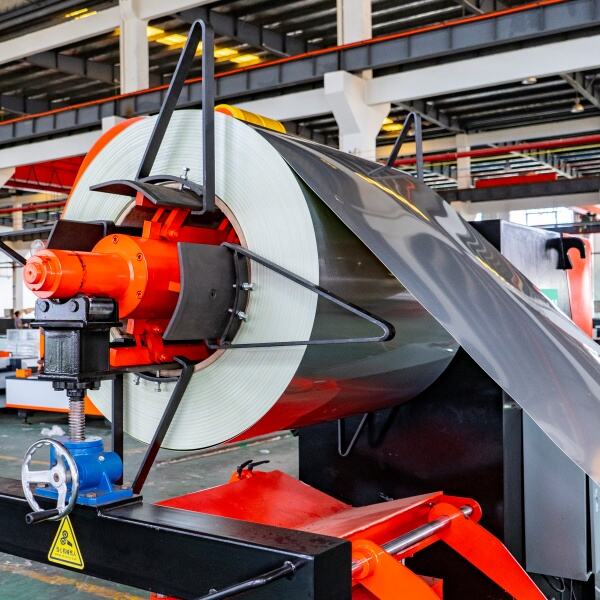
Why Fiber Laser Cutting Machines Excel in Precision Manufacturing
How Fiber Laser Cutting Supports Precision and Accuracy in Sheet Metal Cutting
Fiber laser cutters can get down to micron level precision thanks to their incredibly fine beam focus, sometimes as narrow as just 0.01 millimeters. This allows them to make clean, accurate cuts even through sheet metal that's 30 mm thick. Because these machines produce such a narrow kerf (less than 0.1 mm wide) and generate very little heat around the cut area, there's hardly any warping of the material afterward. That makes fiber lasers particularly well suited for specialized applications like manufacturing aerospace components or creating templates for medical implants where tolerances need to stay within plus or minus 0.05 mm. When running at scale, automated systems adjust the laser beam intensity automatically, which keeps quality consistent throughout large batches. Studies show this automation reduces size variations by about 72 percent when compared with older manual plasma cutting methods.
Key Advantages of Fiber Laser Cutting Over Traditional Methods
- Material Versatility: Processes reflective metals like copper and aluminum without the beam instability issues common in CO2 lasers
- Speed-to-Precision Ratio: Cuts three times faster than mechanical punching while maintaining accuracy within 0.1 mm
- Reduced Secondary Processing: Achieves surface roughness of Ra 1.6 µm, significantly smoother than the Ra 12.5 µm typical of plasma-cut parts
These systems also consume 40% less energy than equivalent CO2 lasers, supporting sustainable manufacturing without sacrificing cut quality.
Evolution of Fiber Laser Cutting Technology in Industrial Applications
The latest fiber laser machines now come equipped with AI enhanced CNC systems that automatically adjust focal lengths and manage gas pressure as things happen. Some models feature hybrid setups combining six axis robotic arms with three kilowatt laser power sources. These allow for intricate cuts along complicated shapes in tough materials like hardened steel, sometimes reaching cutting speeds around fifteen meters per minute. The industry has seen a big shift toward these systems especially in making battery trays for electric vehicles. Getting those dimensions right matters a lot here since components need to stay within plus or minus point two millimeters across lengths of about one and a half meters. That kind of precision helps keep temperatures under control which is critical for how well the batteries perform overall.
Achieving High Accuracy in Cutting Complex and Intricate Parts
Design Flexibility for Complex and Intricate Parts Using Fiber Laser Cutting
With fiber laser cutting, manufacturers can hold tight tolerances around ±0.001 inch even when working on intricate parts that have those really sharp inside corners or tiny details under 0.1 millimeter. The reason this works so well is because of how focused the laser beam gets down to about 20 microns, plus those computer-controlled movement systems that just don't suffer from tool wear issues like traditional methods do. Looking at recent data from the 2024 industrial machining survey, almost 78 percent of shops reported they were able to push their design boundaries by roughly 40% once they switched to fiber lasers. This has been especially noticeable in industries making medical devices where fluid pathways need to be absolutely clean, and in aerospace applications where sensors must have edges free of any burrs that could interfere with performance.
Cutting Complex Shapes and Intricate Designs with Fiber Laser Machines
Fiber laser cutting works without touching the material, so it doesn't deform things when working on stuff like thin brass shims that are just 0.02 inches thick or heavy duty carbon steel plates going up to about an inch thick. When integrated with CAD software, operators can program all sorts of complex designs including honeycomb structures and even fractal patterns, and the cut width stays really narrow at less than 0.006 inches across. For companies making plates for electric vehicle batteries, these fiber laser systems hit around 99.8 percent accuracy every time they run the same job. That kind of consistency cuts down on wasted materials significantly too – factories report roughly 32% fewer scraps compared to what they used to get with traditional CO2 laser technology.
Tolerances in Laser Cutting for Precision Parts: How Accurate Is Laser Cutting?
Modern fiber lasers deliver positioning accuracy within 5 micrometers (0.0002"), four times tighter than plasma cutting. This level of precision supports press-fit assemblies in turbine blades without secondary machining. Key tolerance metrics include:
- Edge perpendicularity: < 0.5° deviation in 12" cuts
- Surface roughness: Ra < 125 µin (3.2 µm) for optical components
- Hole circularity: ±0.0004" in 0.04"-diameter micro-vias
Factors Affecting Laser Cutting Precision in High-Complexity Components
Material reflectivity—especially in copper—requires dynamic power adjustments to sustain ±0.001" accuracy. Six key variables influence outcomes in complex geometries:
- Assist gas purity (99.95% nitrogen minimizes oxidation)
- Nozzle condition (worn tips cause up to 15% kerf variation)
- Beam collimation (impacts focal depth consistency)
- Thermal expansion compensation algorithms
- Sheet flatness (±0.002"/ft maximum deviation)
- Cutting speed (adjustable between 20–600 IPM based on material)
Advanced systems use AI to monitor and correct these parameters in real time, achieving 95% first-pass yield rates in aerospace fuel nozzle manufacturing.
Core Technologies Enabling Precision in Fiber Laser Cutting Systems
The size of the laser beam spot plays a huge role in how accurate fiber laser cutting can be. Today's fiber lasers generate spots as small as 0.01 mm to 0.03 mm across, which is roughly one tenth the thickness of a single strand of hair. When focused so tightly, these beams reach incredible energy concentrations around 100 million watts per square centimeter. The result? Super clean cuts that barely heat up surrounding material. Industries working on precision parts need this level of control. Take turbine blades for example. Manufacturers require extremely tight specifications here, often keeping edges within just plus or minus 0.001 inch tolerance. Such fine detail makes all the difference when building components where even minor deviations could lead to major problems down the line.
CNC control systems in fiber laser setups deliver impressive precision, keeping axis positioning accurate to about 0.002 inches while handling feed rates that can reach 200 meters per minute. These systems come equipped with smart software that adjusts for heat-related shifts when running for long periods, so position remains stable with less than 0.01 mm drift even after working straight through a full 12 hour shift. Combine this with automatic material loading and unloading processes, and factories see around a 78 percent drop in mistakes caused by workers. This makes all the difference in facilities producing thousands of medical devices daily where consistency is absolutely essential.
When working with CAD/CAM software for precision cutting tasks, manufacturers can achieve incredibly tight geometric tolerances down to around plus or minus 0.003 inches. This level of precision matters a lot when making complicated parts for cars, especially those electric vehicle battery casings that need exact dimensions. The AI powered nesting software really helps out too, getting material utilization up to nearly 98.5% efficient while slashing programming time by about two thirds compared to traditional methods. And let's not forget the real time collision detection feature that stops tools from going off track during operation. This keeps everything running smoothly and meets all the requirements set forth in ISO 9013 standards regarding dimensional accuracy, something quality control managers appreciate greatly.
Industrial Applications of Fiber Laser Cutting in High-Precision Sectors
Precision and accuracy in fiber laser cutting for aerospace components
Fiber lasers can cut aerospace grade aluminum and titanium with incredible precision around 0.1mm tolerance, which meets those strict AS9100 quality requirements. These lasers make all sorts of critical parts for aircraft engines including turbine blades, fuel system pieces, and various structural supports throughout the plane. According to a recent study from the aviation manufacturing sector in 2023, parts made with fiber lasers actually last longer under stress compared to ones cut by water jets. The research showed about 23% better fatigue resistance because there's less heat damage during the cutting process. This makes a big difference for manufacturers looking to build safer, more durable aircraft components.
Medical device manufacturing using laser cutting for complex components
Fiber lasers can cut materials as narrow as 50 microns, making them really good for things like coronary stents and prototypes for surgical tools made from 316L stainless steel. The incredible precision at this scale means doctors can integrate tiny fluid channels into biopsy needles and create those important micro textures on implants that help with healing. According to some recent guidelines from the FDA back in 2024, there's evidence showing laser cut medical devices have around 40 percent fewer defects after production when compared to traditional stamped versions in laboratory tests. This matters because it translates to better quality products for patients.
Automotive sector adoption of fiber laser cutting process and technology
Automakers use fiber lasers to cut EV battery enclosures with 0.25 mm precision while achieving 98% material utilization. The process handles ultra-high-strength steel (1,500 MPa) for crash-resistant pillars and thin aluminum (0.6 mm) for lightweight body panels. Industry reports confirm laser cutting reduces prototype development cycles by 30% compared to traditional die-cutting methods.
Fiber Laser vs. CO2 Laser: A Precision-Centric Comparison
Why fiber laser cutting outperforms CO2 lasers in precision tasks
Fiber lasers work around the 1.064 micrometer wavelength range, which creates a beam spot that's actually about ten times smaller compared to those old CO2 lasers operating at 10.6 micrometers. The result? A much tighter focus that allows for really tight tolerances - we're talking plus or minus just 0.1 millimeters when working with thin metal sheets. That kind of precision matters a lot in industries like aerospace manufacturing and medical device production where exact measurements are absolutely essential. Another big advantage comes from their beam divergence staying under 0.25 milliradians. What does that mean practically? Even when using longer focal lengths during cutting operations, the quality remains pretty consistent across the board. And let's not forget about the physical design differences. Unlike traditional laser systems that rely on mirrors and gas chambers, fiber lasers have this solid state construction. This setup cuts down on thermal distortion problems significantly, somewhere around 68% reduction according to some industry tests, making them much better suited for those high volume production runs where consistency is everything.
Trade-offs between speed, cost, and precision in different laser systems
While fiber lasers dominate precision metal cutting, CO2 lasers remain suitable for non-metals like acrylic and wood engraving. Key differences include:
| Factor | Fiber Laser | CO2 Laser |
|---|---|---|
| Cutting Speed* | 5x faster (1mm steel) | Slower on thin metals |
| Energy Efficiency | 90% | 5-10% |
| Operational Costs | $7/hour | $15/hour |
| Material Thickness | Optimal ≤20mm | Effective ≤40mm |
*Source: Industrial laser cutting benchmarks (2024)
For manufacturers prioritizing precision in thin metals, fiber lasers offer 23% lower per-part costs despite higher initial investment. CO2 systems remain a practical choice for mixed-material operations where extreme accuracy is not the primary requirement.
FAQ
What is the primary advantage of fiber laser cutting machines?
The primary advantage of fiber laser cutting machines is their ability to achieve micron-level precision, which is especially beneficial for applications requiring high accuracy, such as aerospace and medical implant manufacturing.
How does fiber laser cutting compare to traditional methods in terms of material versatility?
Fiber laser cutting machines can effectively process reflective metals like copper and aluminum without the beam instability issues faced by CO2 lasers, showcasing superior material versatility.
Why is fiber laser cutting technology favored in industries manufacturing intricate parts?
Fiber laser cutting technology allows manufacturers to maintain tight tolerances and precise details without tool wear issues, enabling design flexibility and accuracy in industries like medical device manufacturing.
What are the factors that affect the precision of fiber laser cutting?
Precision in fiber laser cutting is influenced by factors such as assist gas purity, nozzle condition, beam collimation, thermal expansion compensation, sheet flatness, and cutting speed.
Why are fiber lasers preferred over CO2 lasers for precision tasks?
Fiber lasers are preferred for precision tasks due to their smaller beam spot size, tighter focus, and reduced thermal distortion, offering better reliability in high volume production environments.
Table of Contents
- Why Fiber Laser Cutting Machines Excel in Precision Manufacturing
- Achieving High Accuracy in Cutting Complex and Intricate Parts
- Core Technologies Enabling Precision in Fiber Laser Cutting Systems
- Industrial Applications of Fiber Laser Cutting in High-Precision Sectors
- Fiber Laser vs. CO2 Laser: A Precision-Centric Comparison
- FAQ