 EN
EN



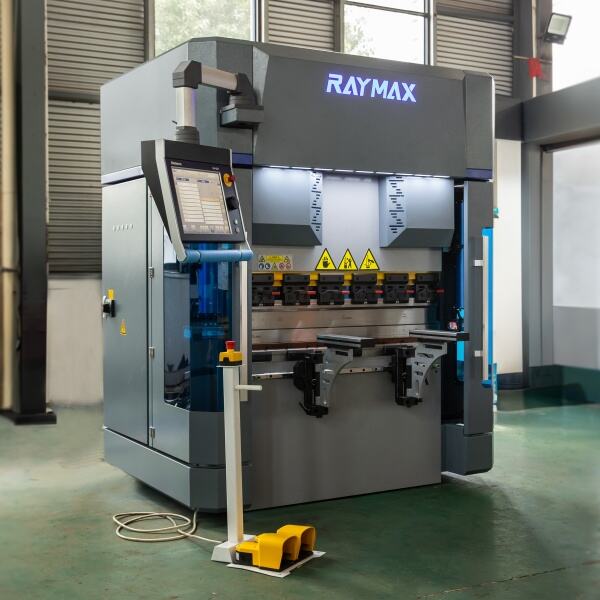
How CNC Controls Enable Precision in Metal Bending
CNC systems, which stands for Computer Numerical Control, can achieve really fine precision in press brake work when they sync up those hydraulic or electric actuators with the programmed instructions. The machines use these high resolution encoders along with constant feedback to tweak where the ram goes, usually keeping it within about 0.1 mm accuracy. This means bends come out consistently right, even when working with tough materials like high strength alloys that are notoriously difficult to shape properly. What makes this possible is what engineers call closed loop control. Basically, the system keeps adjusting on the fly to account for things like heat buildup that causes parts to expand slightly or mechanical components that might deflect under pressure over long production cycles. This kind of adaptive control is why many shops prefer CNC over traditional methods for their critical bending jobs.
Back-Gauge Accuracy and Multi-Axis Control Systems for Repeatability
Modern press brakes utilize 6-axis CNC systems to coordinate backgauge positioning, crowning adjustments, and tool alignment simultaneously. Laser-assisted backgauges achieve ±0.05 mm repeatability over 10,000 cycles, maintaining uniform flange lengths. Multi-axis synchronization prevents cumulative errors in complex geometries such as Z-bends or hemmed edges.
CNC Programming and Offline Simulation for Error Reduction
Offline programming platforms like Autodesk Inventor and SolidWorks CAM enable engineers to model springback compensation based on material elasticity, simulate tool interference in multi-stage bends, and generate collision-free toolpaths for asymmetric components. Virtual verification through these systems reduces setup errors by 62% compared to manual methods (Fabricating & Metalworking, 2023).
Automatic Press Brake Technology and Its Role in Improving Bending Precision
Robotic tool changers and adaptive bending systems support lights-out manufacturing while sustaining ±0.5° angular accuracy. Servo-electric models automatically modulate tonnage distribution across the bed to accommodate variable material thickness. Real-time angle monitoring via LVDT sensors triggers micro-adjustments mid-bend, effectively countering springback in advanced high-strength steels.
Ensuring Repeatability and Angle Consistency in High-Volume Production
Achieving Consistent Bend Angles in High-Volume Production
In high volume manufacturing settings, automated press brakes can hold bend angles within about 0.1 degrees thanks to their closed loop CNC controls which constantly tweak the ram position as needed. A recent report from the Fabrication Technology Institute back in 2024 showed something pretty significant actually - these automated setups cut down on angular deviations by around two thirds compared to what happens when operators do it manually. That kind of accuracy matters a lot in industries like aerospace and automotive manufacturing where even small dimensional differences can impact how well components perform. And let's not forget about those load sensors either. They're basically there to catch any unexpected shifts in tools or variations in materials so corrections happen instantly during production runs rather than after the fact.
Minimizing Variation Through Process Repeatability
Modern press brakes equipped with automated back gauges and those fancy 10-axis CNC controls can consistently reproduce the same bend on over 15 thousand parts, hitting about 95% repeatability rates. One major auto parts manufacturer saw incredible results too - they got down to just 0.05mm variation when making brake brackets once they added those robotic tool changers to their setup. When shops standardize their workflows, mistakes from humans drop off significantly. Facilities certified under ISO 9001 standards actually see around 32% fewer parts that fall outside acceptable dimensions according to ASM International research from last year.
Preventing Inconsistent Bends with System Calibration
Regular laser calibration keeps crowning systems parallel to within about 0.002 mm per meter, which stops those annoying tonnage imbalances that cause angles to go off track. The interferometric sensors watch angles as they happen, so they can catch and fix springback issues right in the middle of production cycles. This helps maintain final tolerances around plus or minus 0.25 degrees even with tough high strength steel materials. Shops that align their servo motors every two weeks report cutting down on recalibration problems by roughly 40 percent according to last year's Precision Machining Report. Makes sense really, since keeping everything properly aligned just saves time and money in the long run.
Tooling Quality, Die Alignment, and Load Distribution for Precision Bending
Precision bending depends on three interdependent factors: tooling durability, accurate die positioning, and uniform load distribution. A mere 0.1 mm tooling misalignment can result in angular deviations exceeding 0.5° in long bends, undermining consistency in high-volume settings.
Die Alignment and Tooling Rigidity in Precision Bending
The hydraulic clamping system does a great job at centering and securing those dies, so there's no need to worry about setup mistakes that lead to uneven pressure distribution across the workpiece. When it comes to dies themselves, they're precision ground using hardened steel alloys. These special dies keep the V opening within really tight tolerances around plus or minus 0.02 millimeters. This attention to detail cuts down on springback issues by roughly 30% when compared with regular old tooling setups. And let's not forget about those rigid tool holders either. They stand up against deflection even when dealing with massive amounts of tonnage. This matters a lot during operations involving tough materials such as stainless steel or titanium where any give in the equipment can ruin an entire batch.
Tonnage Calculation for Air Bending and Even Load Distribution
Getting the right tonnage calculation really matters because it stops tools from bending out of shape and wearing down too fast. There's a basic formula most folks use: take the material tensile strength, multiply it by thickness and bend length, then divide everything by a safety factor to figure out what the machine can handle during air bending operations. When working with metal, going for wider dies around 8 to 12 times the material thickness helps spread out the stress more evenly across the workpiece. On the flip side, if someone tries to get away with smaller V-openings than recommended, they'll end up needing about 15 to maybe 20 percent more power just to get the job done properly. These days, modern CNC machines have gotten pretty smart about all this stuff. They constantly tweak the ram force based on actual measurements of how thick the material is at any given moment, which keeps things running consistently within about plus or minus 1% accuracy even after thousands upon thousands of bends.
Managing Material Variability and Springback for Accurate Results
Elastic recovery and material inconsistency account for 53% of dimensional errors in high-volume bending (Fabrication Tech Report, 2023). Advanced press brake systems employ adaptive strategies to mitigate these variables.
Impact of Material Thickness and Hardness on Bending Accuracy
Thickness variations as small as ±0.1 mm can shift bend angles by 0.5°–1.2°, while batch-to-batch hardness fluctuations in alloys like aluminum 6061 may increase springback by 18%.
Material-Specific Springback Compensation Techniques
Steel typically requires 2°–3° overbending to offset springback, whereas aluminum alloys demand 4°–7° due to higher elastic modulus. Advanced CNC systems apply these corrections automatically using preloaded material databases.
Overbending Strategies to Counteract Elastic Recovery
Closed-loop systems measure deformation in real time, adjusting ram position mid-stroke to achieve target angles within ±0.15°. This capability eliminates trial-and-error setups and reduces scrap rates by 34% in production runs.
Real-Time Angle Correction Using Sensors and Feedback Systems
Laser-based sensors mounted on the upper die capture angular deviations at 1,200 Hz, initiating sub-0.1 mm ram corrections. This active feedback neutralizes inconsistencies between sheets, preserving accuracy despite ±8% variations in material properties.
Machine Calibration and Maintenance for Sustained Press Brake Accuracy
Sustained precision in sheet metal fabrication relies on rigorous calibration and structured maintenance protocols.
Daily Cleaning and Inspection to Prevent Performance Drift
Debris and coolant residue on critical components—including the ram, dies, and backgauge sensors—can introduce errors exceeding ±0.004" per cycle. Daily cleaning reduces drift-related scrap by 29% in high-output environments. Key practices include:
- Wiping guide rails and hydraulic cylinders with non-abrasive solvents
- Checking lubrication levels in CNC-axis drives
- Inspecting tooling surfaces for chips or wear
Professional Calibration Checks and Axis Realignment
While operators handle minor adjustments, professional calibration every 400 operating hours ensures compliance with ISO 9013 standards. A 2024 Fabrication Equipment Study found third-party calibration services improve angle consistency by 63% compared to in-house checks. Technicians use laser alignment tools to:
- Confirm ram-to-bed parallelism (target: ±0.0005"/ft)
- Re-zero CNC backgauge systems
- Validate hydraulic tonnage uniformity across the bending length
Long-Term Equipment Maintenance for Reliable Precision
Replacing wear-prone components such as hydraulic seals and servo motor brushes at 5,000-hour intervals prevents gradual accuracy loss. Manufacturers following predictive maintenance schedules report 41% fewer unplanned downtimes. Essential long-term practices include:
- Annual overhaul of hydraulic pumps and valve blocks
- Re-greasing linear guideways with NSF H1-certified lubricants
- Updating CNC control firmware to access new error-compensation algorithms
Combining daily oversight with scheduled service maintains press brake accuracy within ±0.12° bend angle tolerances throughout multi-year production cycles.
FAQ Section
What is CNC technology in metal bending?
CNC, or Computer Numerical Control, technology in metal bending refers to the use of computerized systems to control machines that perform bending operations on metal sheets with high precision. CNC systems coordinate hydraulic or electric actuators with programmed instructions to maintain consistent accuracy in bending processes.
How does CNC programming help in error reduction?
CNC programming helps in error reduction by using offline programming platforms like Autodesk Inventor and SolidWorks CAM to model compensation techniques, simulate tool interference, and generate collision-free toolpaths. This virtual verification reduces setup errors significantly compared to manual methods.
Why is system calibration important for press brakes?
System calibration is crucial for press brakes as it ensures accuracy and repeatability in bending processes. Regular laser calibration helps maintain parallelism and prevents tonnage imbalances that can affect angular accuracy during production cycles.
How does material variability impact bending accuracy?
Material variability, such as thickness and hardness fluctuations, impacts bending accuracy by causing changes in bend angles due to elastic recovery. Adaptive CNC systems can mitigate these effects using material-specific compensation techniques.