Customized services to meet individual needs
fiber cutting machine-0
fiber cutting machine-1

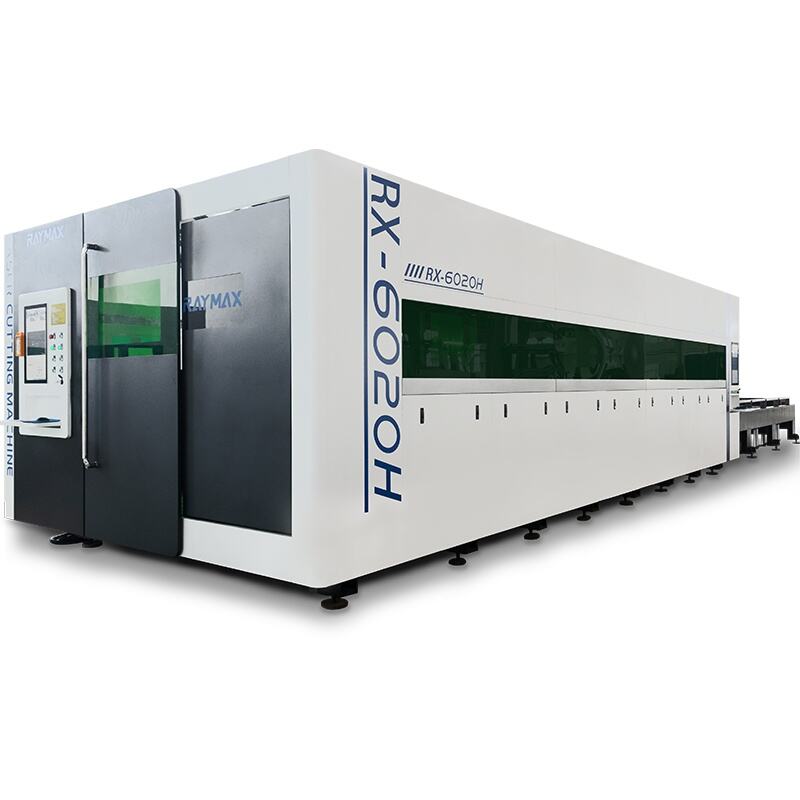
RAYMAX Fiber Laser Cutting Machine – Anti-Collision Ceramic Ring with Breakaway Sensor for Nozzle Protection

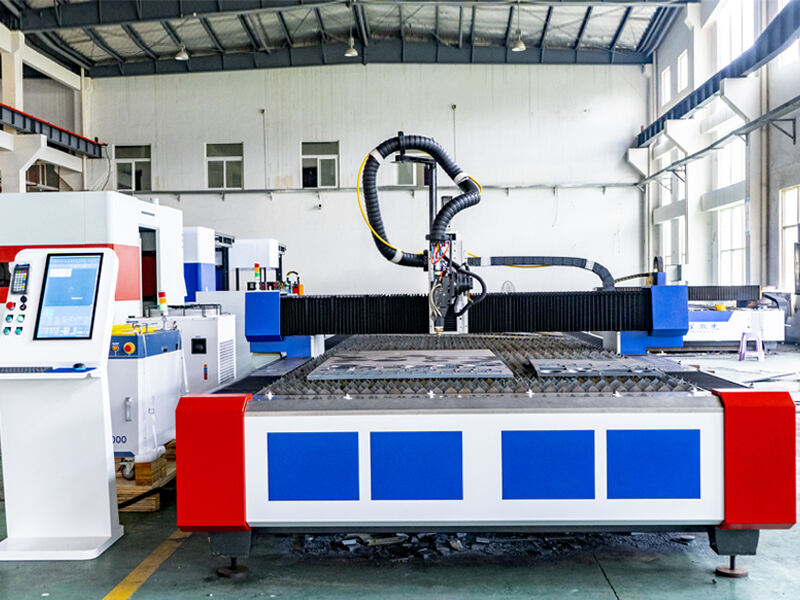
RAYMAX fiber laser cutting machine uses a ceramic ring with a breakaway sensor that instantly stops the axis drives if the cutting head collides with a tilted or warped sheet. The ceramic ring is designed to break cleanly, protecting the expensive cutting head. Replacement rings cost only $15. The sensor also records collision location for operator review. Cutting area 2000mm x 4000mm, laser power 3kW. This fiber laser cutter is ideal for shops cutting imperfect sheets or salvage material. RAYMAX includes three spare ceramic rings and a collision recovery procedure guide. The machine also has a soft limit setting to reduce collision risk.
Get A Quote

advantage

Cutting Accuracy of ±0.05mm for Complex Geometries

RAYMAX fiber laser cutting machine delivers cutting accuracy of ±0.05mm with edge roughness as low as Ra 1.6μm, making it the premier choice for automotive, aviation, railway, and ship industries. Our CNC fiber laser cutting technology merges CNC control with fiber-optic laser tech, achieving positioning accuracy of ±0.03mm for intricate designs like aviation wing brackets and automotive fuel injectors. The 1064nm wavelength laser beam can be focused as narrow as 0.01mm, enabling clean cuts on complex shapes without secondary finishing. Dynamic nesting software automatically arranges parts on metal sheets to minimize waste, reducing material scrap by up to 15%. Trusted by 4000+ customers and developed through university partnerships.

High-Speed Cutting with 120m/min Rapid Traverse

RAYMAX fiber laser cutting machine achieves rapid traverse speeds of up to 120m/min with acceleration of 1.0G, dramatically reducing cycle times for high-volume production. A 3000W model cuts 10mm carbon steel at 1.2m/min, while 4kW machines cut 20mm carbon steel with edge roughness Ra < 2μm. The fiber laser source provides 3x faster cutting speeds than CO₂ lasers with 40% less power consumption. Our open-type fiber laser cutter integrates plate and tube cutting in one machine, featuring automatic focal length tracking and adjustment that easily handles twisted or deformed materials. Adaptive laser power control adjusts power in real-time based on material thickness and type—reducing power for thin aluminum to avoid warping, increasing for thick carbon steel to ensure full penetration.

Industry 4.0 Connectivity and Real-Time Quality Assurance

RAYMAX fiber laser cutting machine integrates Industry 4.0 connectivity, allowing synchronization with factory MES systems for remote monitoring of production metrics including cut speed, parts produced, downtime, and predictive maintenance alerts. Our real-time quality assurance tools include laser vision sensors that capture 200+ images per second of the cutting process, comparing actual cuts to design files and alerting operators to deviations as small as 0.03mm to prevent defective batches. The CNC system supports advanced features like dynamic nesting and automatic program updates. Siemens or Fanuc control systems act as the machine's brain, interpreting DXF, DWG, or 3D CAD files and translating them into precise movements along X, Y, and Z axes.

Related products

Reflective metal cutting for copper, brass, and bronze has traditionally been one of the most difficult applications for laser cutting technology due to these materials’ high reflectivity to near-infrared laser wavelengths and their exceptional thermal conductivity. When a fiber laser beam strikes a copper surface at room temperature, a significant portion of the incident energy reflects away, leaving insufficient energy to initiate melting and cutting. Modern fiber laser cutting machines overcome this limitation through several technological approaches, including high-power beams exceeding 2000W that overcome initial reflectivity by rapidly heating the copper surface to its melting point, at which point absorption increases dramatically. Our fiber laser cutting machines process copper up to 12mm thickness and brass up to 10mm thickness when equipped with 6000W power configurations, making them suitable for electrical busbar fabrication, heat exchanger production, and decorative architectural applications. The fiber laser’s 1064nm wavelength is absorbed approximately 5 to 10 times more efficiently by metals compared to CO2 laser wavelengths, giving fiber lasers a fundamental advantage for reflective material cutting. Advanced beam oscillation techniques further improve cutting performance by moving the laser spot in programmed patterns that pre-heat the cut zone and stabilize the cutting front. For brass cutting, which presents different reflectivity characteristics due to the zinc content, our machines use optimized parameters that prevent zinc vaporization issues that can cause porosity along the cut edge. For electrical copper components used in power distribution equipment, our fiber laser cutting machines produce clean, conductive edges that require minimal post-cut cleaning, maintaining the material’s electrical conductivity for busbar connections. The assist gas selection for reflective metals is critical, with nitrogen typically used to prevent oxidation and maintain the material’s natural appearance for decorative applications, while compressed air may be sufficient for industrial components where edge appearance is less critical. For thin copper materials down to 0.5mm used in electronic components and flexible printed circuit board manufacturing, lower power settings and higher cutting speeds prevent heat buildup that could cause material warping or edge melting. The non-contact nature of fiber laser cutting eliminates tool wear issues common with mechanical cutting methods for copper, where tool life is typically short due to the material’s abrasive characteristics. Contact our reflective metal cutting specialists to discuss machine configurations optimized for your specific copper, brass, or bronze thickness requirements and receive application-specific parameter recommendations.
Frequently Asked Questions

What key functions does an ironworker machine combine?

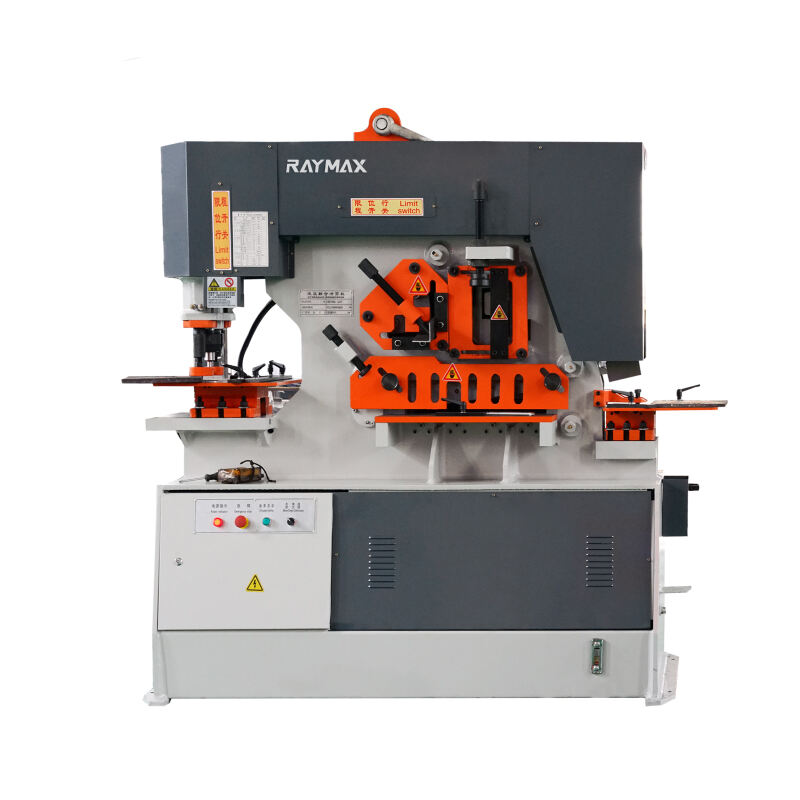
An ironworker machine integrates punching, shearing, notching, and bending in a single setup. It can punch holes up to 32mm in diameter, shear 6-12mm steel plates, and achieve bending angles up to 135°, greatly reducing the need for separate machines.
Fiber laser welding is 4-10 times faster, produces a significantly smaller heat-affected zone (minimizing distortion), and offers better energy efficiency with lower consumable costs. The process also creates clean, spatter-free welds that often require no secondary finishing.
A fiber laser cutting machine can cut most metal materials including carbon steel, stainless steel, aluminum, copper, brass, and titanium alloys, with a maximum cutting thickness of up to 50mm for certain metals.
RAYMAX shearing machines achieve cutting accuracy of ±0.05mm, which is 10 times faster and more precise than manual cutting methods, delivering clean, straight edges essential for automotive, aerospace, and construction applications.

Related Articles

Working Principle Of Tandem Press Brake

27

Nov

Working Principle Of Tandem Press Brake

View More
How To Use Fiber Laser Cutting Machine To Improve The Utilization Rate Of Sheet Metal?

27

Nov

How To Use Fiber Laser Cutting Machine To Improve The Utilization Rate Of Sheet Metal?

View More
The 136th RAYMAX Canton Fair was kicked off

27

Nov

The 136th RAYMAX Canton Fair was kicked off

View More
The Ultimate Guide to Choosing the Right Press Brake Machine

The Ultimate Guide to Choosing the Right Press Brake Machine

Discover the types of press brake machines, including hydraulic, CNC, and hybrid designs. Learn about calculating press brake requirements and minimizing springback effects. Explore advanced features that enhance precision and safety in manufacturing.
View More

Customer Reviews

Roberto Ferrari

We upgraded from CO₂ laser cutting to RAYMAX fiber laser cutter and saw immediate productivity gains. The 3kW model cuts 10mm carbon steel at 1.2m/min, three times faster than our old machine with 40% less power consumption. The open-type design integrates plate and tube cutting, allowing us to process both without separate equipment. The automatic focal length tracking handles twisted or deformed materials without manual adjustment. The machine cuts reflective materials like brass and copper without the stability issues we had before. The energy savings alone justify the investment. RAYMAX's installation team ensured everything was configured correctly before leaving.

Mikhail Volkov

Our shipyard runs round-the-clock production, and RAYMAX fiber laser cutter has enabled overnight unattended operation. The 6kW model cuts 40mm mild steel with oxygen assist at 0.8 m/min, meeting our thick plate requirements for hull sections. The pallet changer swaps full pallets of finished parts in 2 minutes, allowing continuous cutting. The chip collection system prevents debris buildup that could scratch parts. The machine operates with just 2 operators per shift, producing 500+ parts per day for our shipbuilding operations. The robust construction handles the heavy-duty demands of a shipyard environment. Their remote monitoring system lets us track production metrics from anywhere. The machine has exceeded our expectations for both speed and reliability.

Get a Free Quote

Our representative will contact you soon.
Email
Mobile/WhatsApp
Name
Company Name
Message
0/1000
High-Precision Metal Cutting with ±0.05mm Accuracy

High-Precision Metal Cutting with ±0.05mm Accuracy

RAYMAX fiber laser cutting machine delivers cutting accuracy of ±0.05mm with edge roughness as low as Ra 1.6μm, making it the premier choice for automotive, aviation, railway, and ship industries. The 1064nm wavelength laser cuts carbon steel up to 50mm thick, stainless steel, aluminum, brass, and copper with a heat-affected zone smaller than 0.1mm. Integrated with CNC systems from Siemens or Fanuc, this machine interprets DXF and DWG files to cut intricate shapes such as aviation wing brackets and automotive components with ±0.03mm positioning accuracy.