Customized services to meet individual needs
hydraulic press brake machines-0
hydraulic press brake machines-1

RAYMAX Hydraulic Press Brake – Double-Action Hydraulic Cylinders for Faster Return Stroke

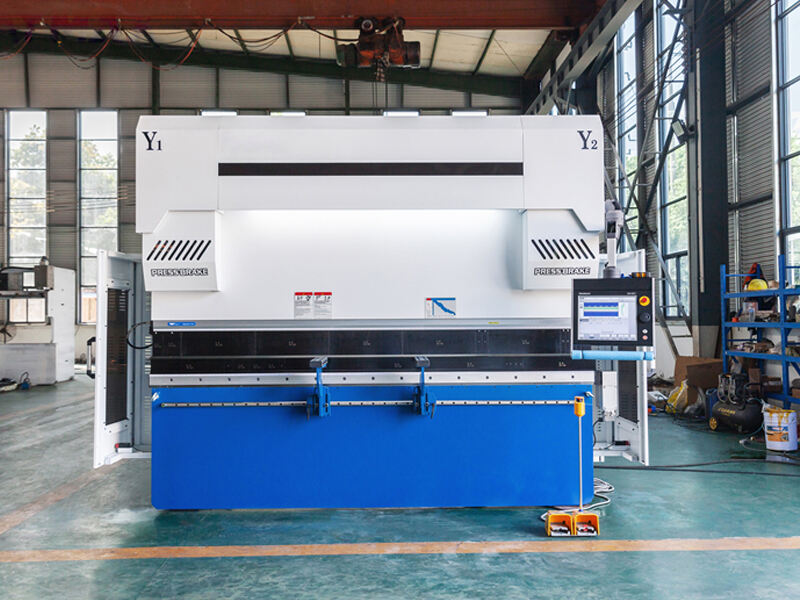
RAYMAX hydraulic press brake uses double-acting cylinders that apply hydraulic pressure both to extend and retract the ram, reducing return stroke time by 50% compared to single-acting (gravity return) designs. Cycle time for a typical 90° bend is reduced to 3 seconds. Bending force 120 tons, length 2.5m. The machine also includes a proportional valve for smooth reversal. This hydraulic press brake is suitable for high-volume bending of light to medium gauge parts. RAYMAX provides a cycle counter to measure productivity gains. The double-acting design also allows controlled lowering in case of power failure.
Get A Quote

advantage

Massive Bending Force for Heavy-Duty Applications

RAYMAX hydraulic press brake delivers bending forces from 80 tons up to 2,000 tons, making it the definitive choice for heavy plate bending in shipbuilding, offshore platform construction, and mining equipment manufacturing. Our dual-cylinder design with torsion bar synchronization ensures the ram remains parallel to the bed even under eccentric loading, maintaining consistent bend angles across long workpieces. The hydraulic system uses high-performance servo pumps and proportional valves for precise control of slider speed, pressure, and position. With a maximum bed length of 6000mm and throat depth of 400mm, this hydraulic press brake processes ship hull plates, bridge girders, and heavy structural components. Rigid frame construction with critical components analyzed by ANSYS finite element analysis guarantees structural reliability and long-term performance.

Rigid Welded Frame with ANSYS Finite Element Analysis

RAYMAX hydraulic press brake is built on a stress-relieved, fully welded steel frame that has been analyzed using ANSYS finite element analysis to ensure structural reliability and overall machining accuracy. The high-strength steel base and precision-machined guideways provide exceptional rigidity, maintaining bending accuracy even under maximum tonnage. The induction-hardened guide rails (HRC 55) and automatic central lubrication system extend maintenance intervals to 10,000 operating hours. RAYMAX provides a 10-year warranty on the welded frame structure, reflecting our confidence in long-term durability. Every frame undergoes 100% hydraulic pressure testing and 50-cycle continuous bending verification before packing, ensuring trouble-free operation for decades.

Wide Range of Models for Diverse Applications

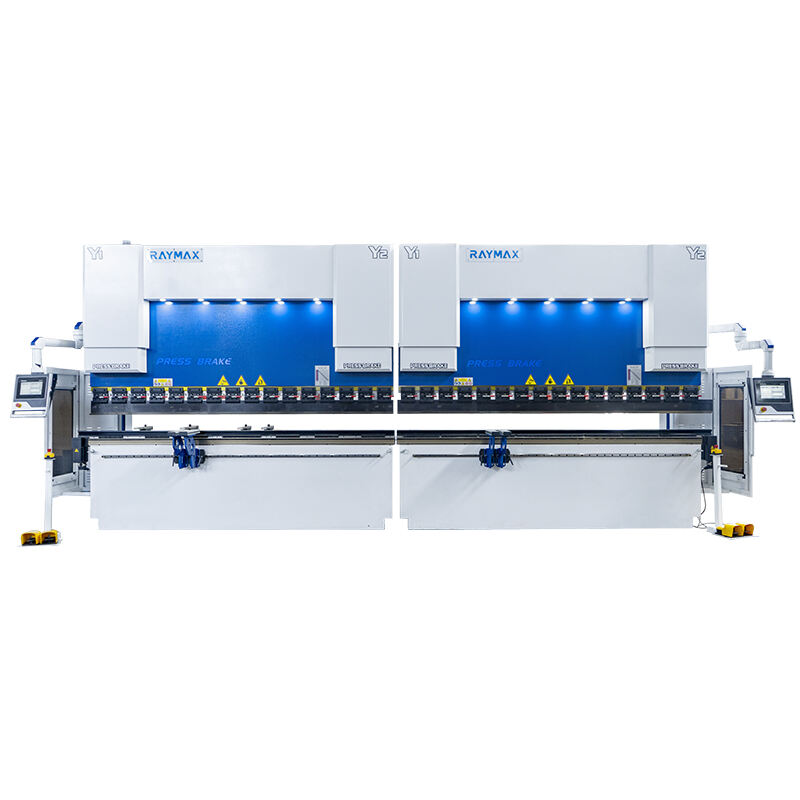
RAYMAX hydraulic press brake is available in a wide range of tonnages from 80 tons to 800 tons and bed lengths from 1500mm to 6000mm, allowing customers to select the exact configuration for their specific applications. Our NC press brake offers price advantage, easy installation, simple operation, and after-sales maintenance, making it the first choice of most customers. The 3-4 axis models suit complex bending with high accuracy, while 6-axis models add left and right movement positioning for the back gauge system, suitable for sheet metal processing with higher requirements. RAYMAX provides custom color options (RAL codes), logo plates, and branded user interfaces for OEM customers. With over 4000 press brakes supplied globally since 2002, RAYMAX has the experience to match the right machine to your application.

Related products

Preventive maintenance is essential for maximizing hydraulic press brake service life and maintaining consistent bending accuracy across production runs. Daily maintenance procedures for hydraulic press brakes include checking hydraulic oil levels in the power unit, verifying that the pump operates normally without unusual noise or vibration, inspecting all hoses and fittings for leaks, and ensuring the pressure relief valve functions correctly. The lubrication system requires daily verification that oil or grease reaches all moving joints, bearings, and pivot points, with manufacturer-recommended lubricants applied to slide ways, ram guides, and ball screws. Weekly inspections should focus on tooling condition, checking punches for wear or chipping, dies for cracking, and verifying that quick-clamp systems are secure. Backgauge calibration should be verified weekly, checking that positioning accuracy remains within specification and that all axes move smoothly without binding or excessive backlash. Monthly maintenance involves cleaning the hydraulic system breather cap, inspecting all electrical connections for tightness, checking the condition of safety guards and interlocks, and verifying that all fasteners remain torqued to specification. For machines with hydraulic crowning systems, the crowning cylinders and hydraulic lines should be inspected for leaks or irregular operation. Every 500 operating hours, hydraulic fluid samples should be analyzed for contamination, with fluid replacement recommended when oxidation or particulate levels exceed manufacturer specifications. The cooling system, which removes waste heat from the hydraulic system, requires inspection of coolant levels and quality. For water-cooled systems, coolant conductivity should be measured and maintained within specifications, with deionized water replacement recommended periodically to prevent algae growth and mineral deposit accumulation. Every 1,000 operating hours, inspect cylinder seals for leakage, verify backgauge ball screw lubrication, and check linear guide rail condition. For electro-hydraulic servo press brakes, inspect servo motor bearings and ball screw preload. Following these maintenance protocols reduces unplanned downtime significantly and extends equipment service life by 10 to 15 years compared to neglected machines. Common troubleshooting issues include insufficient bending force indicating hydraulic problems requiring fluid level verification, inconsistent bend angles pointing to ram synchronization issues or optical scale reading errors, and backgauge positioning errors resulting from loose belt drives or worn ball screws. Our technical support team provides remote and on-site assistance for hydraulic press brake troubleshooting, helping fabricators minimize downtime and restore production quickly. Contact our service department for a comprehensive preventive maintenance schedule customized to your hydraulic press brake model and operating conditions.
Frequently Asked Questions

What is the difference between a swing beam and guillotine shearing machine?

A swing beam shearing machine uses a rotary blade motion and is suited for thinner sheets and high-speed production, while a guillotine shearing machine features vertical blade movement, offering higher precision (adjustable cutting angle 0.5~2°) for thick plates and heavy-duty applications.
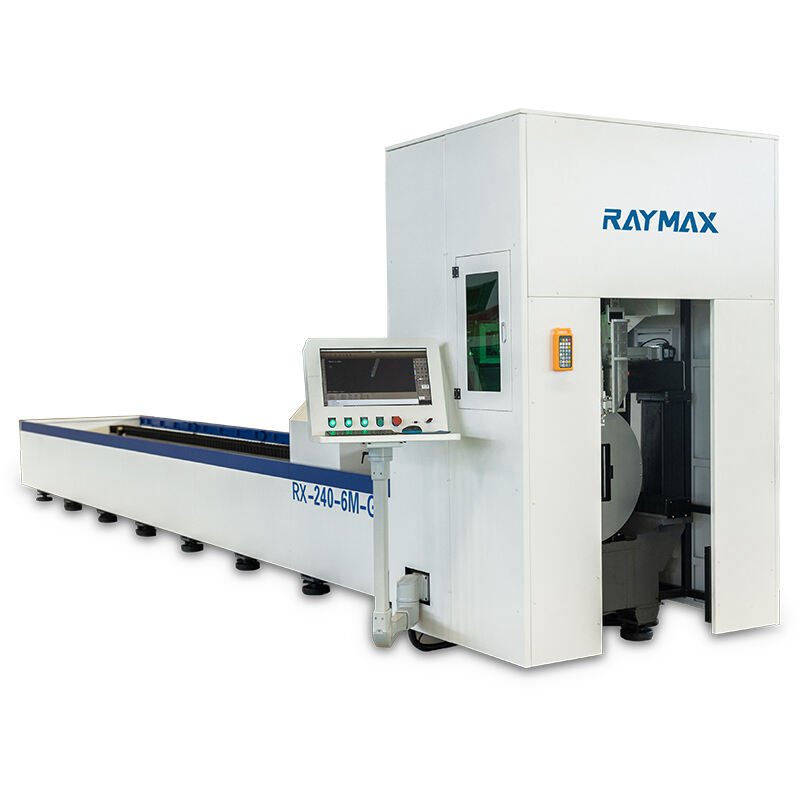
A tube laser cutting machine can process round tubes (20-200mm diameter), square tubes (20×20mm to 150×150mm), rectangular tubes, elliptical tubes, and U-tubes, with a maximum pipe length of up to 15,000mm.
A handheld welding machine is ideal for on-site welding, repairing large workpieces, welding difficult-to-move structures, steel structure field splicing, mold repair, and advertising sign welding, offering flexibility and ease of use without requiring professional welders.
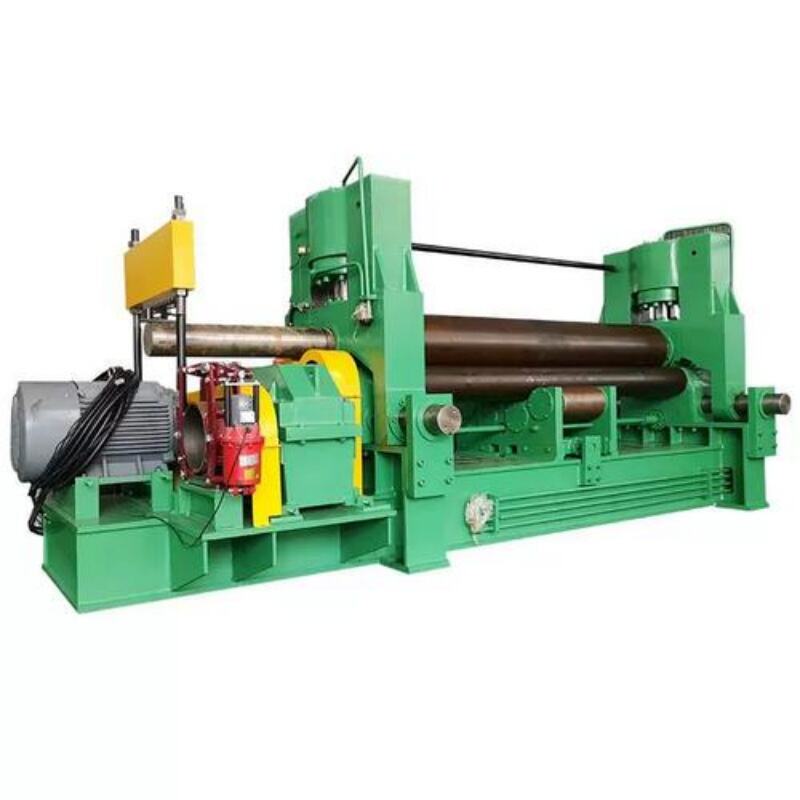
Plate rolling machines are extensively used in wind tower manufacturing to roll conical and cylindrical sections from high-strength steel plates (20-60mm thick), achieving roundness tolerances within ±1mm for proper fit-up during field erection.

Related Articles

How To Use Fiber Laser Cutting Machine To Improve The Utilization Rate Of Sheet Metal?

27

Nov

How To Use Fiber Laser Cutting Machine To Improve The Utilization Rate Of Sheet Metal?

View More
What Are The Differences Between CNC Press Brake And NC Press Brake?

27

Nov

What Are The Differences Between CNC Press Brake And NC Press Brake?

View More
The 136th RAYMAX Canton Fair was kicked off

27

Nov

The 136th RAYMAX Canton Fair was kicked off

View More
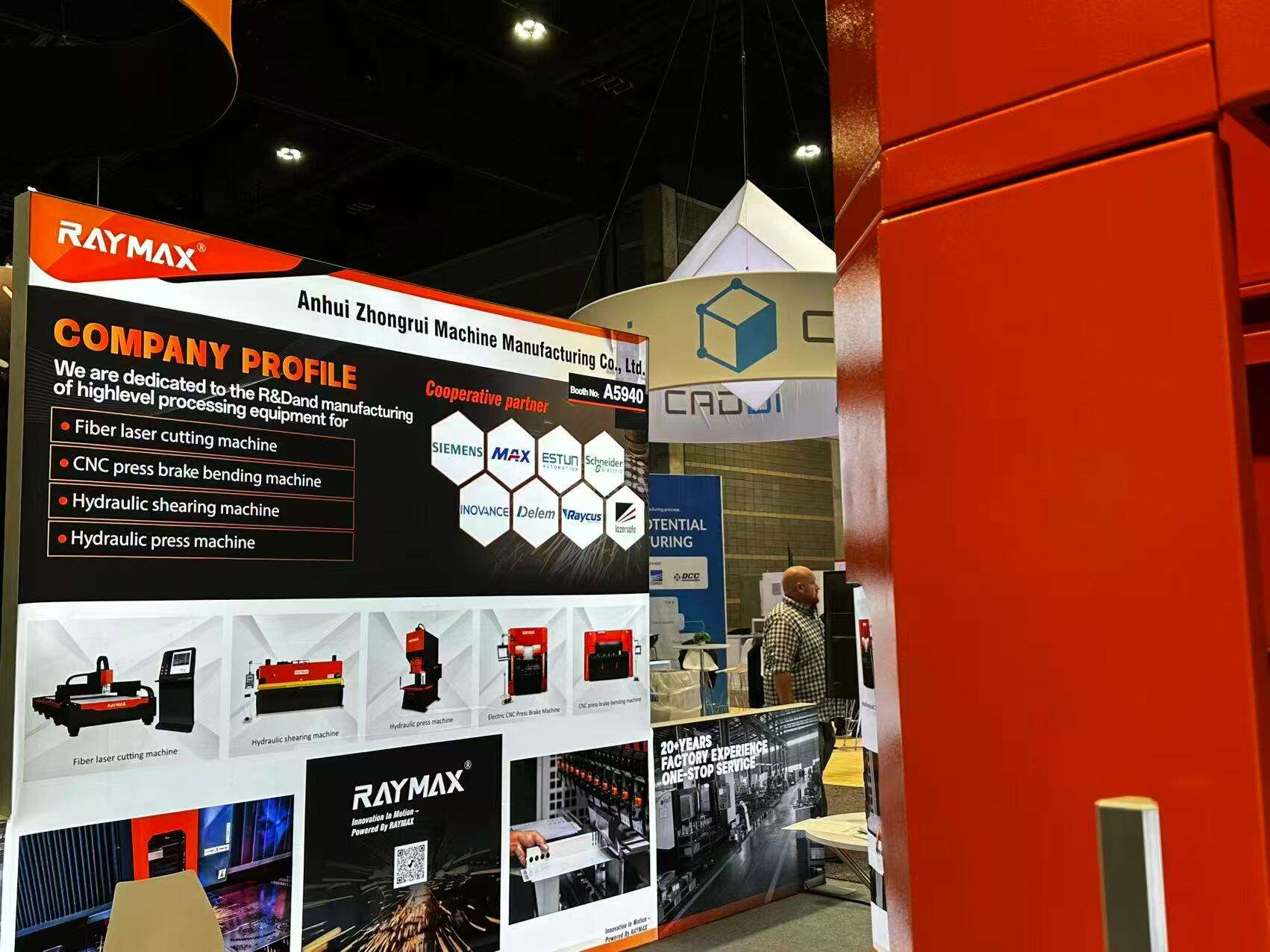
RAYMAX Shines at FABTECH, Smart Bending Shapes the Future!

19

Sep

RAYMAX Shines at FABTECH, Smart Bending Shapes the Future!

View More

Customer Reviews

Hans Fischer

RAYMAX hydraulic press brake with 2,000-ton capacity handles our thick shipbuilding plates with ease. The dual-cylinder design with torsion bar synchronization maintains ram parallelism even under eccentric loading. The hydraulic system uses Rexroth components for reliable performance. The rigid welded frame analyzed with ANSYS finite element analysis provides structural reliability. The mechanical depth stops ensure consistent bend angles across long production runs. The machine processes 50mm thick plates for hull sections without deflection. RAYMAX provided on-site installation and operator training. The 10-year warranty on the welded frame gives us confidence in long-term durability. This press brake has become the backbone of our heavy plate forming operation.

Thomas Anderson

The 150 mm/s fast approach speed on RAYMAX hydraulic press brake reduced our idle time by 40% compared to our previous machine. The adjustable pressing speed from 1 to 10 mm/s allows optimization for different materials. The mechanical depth stops with 0.01mm micro-adjustment ensure consistent bend angles regardless of oil temperature. The hydraulic cushion system absorbs shock during high-speed cycles. The overload relief valve prevents damage from excessive pressure. We process structural steel components for mining equipment daily. The machine has been running for 18 months without any issues. The combination of speed and safety features makes this press brake ideal for our high-volume operation. RAYMAX delivered exactly what they promised.

Get a Free Quote

Our representative will contact you soon.
Email
Mobile/WhatsApp
Name
Company Name
Message
0/1000
Massive Bending Force for Heavy-Duty Metal Forming

Massive Bending Force for Heavy-Duty Metal Forming

RAYMAX hydraulic press brake delivers bending forces up to 2000 tons, making it the definitive choice for thick plate bending in shipbuilding, offshore platforms, and mining equipment. The dual-cylinder design with torsion bar synchronization maintains ram parallelism even under eccentric loading. Featuring fast approach speeds of 150mm/s, adjustable pressing speeds from 1 to 10mm/s, and Bosch-Rexroth hydraulic components, this press brake offers precise control of slider speed, pressure, and position with an integrated overload protection system for safe operation.