Customized services to meet individual needs
best laser welder-0
best laser welder-1

RAYMAX Laser Welding Machine – Non-Contact Metal Joining with Minimal Thermal Distortion

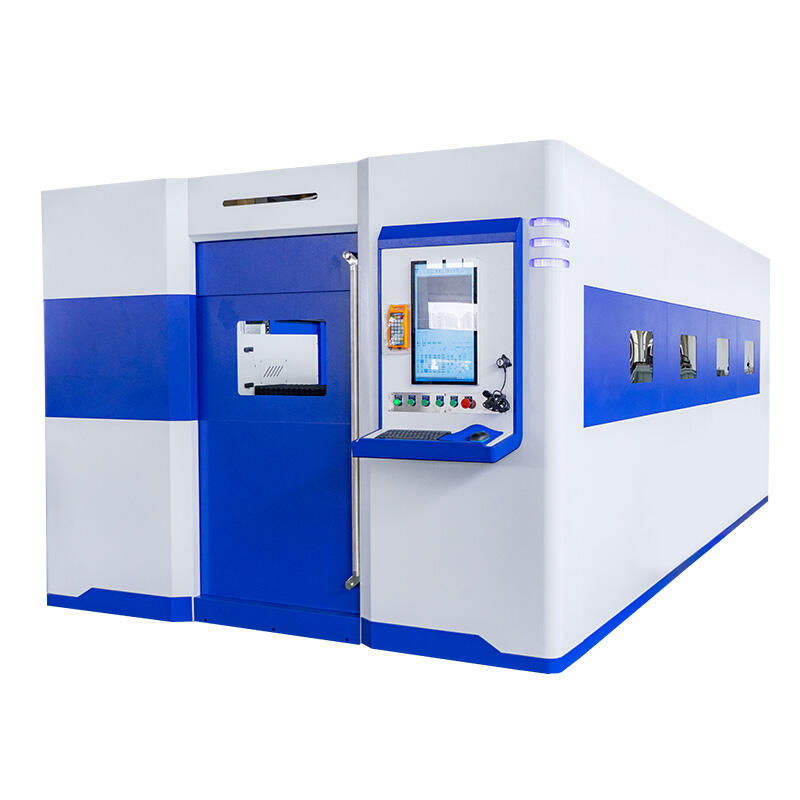
RAYMAX laser welding machine covers fiber, CO₂, and semiconductor laser sources, delivering non-contact welding with no electrode wear and beautiful, consistent welds. Our laser welding systems integrate seamlessly with automated production lines for industries such as electronics, automotive, aerospace, and medical devices. Using state-of-the-art laser technology, our machines significantly reduce thermal and mechanical distortion of welded components, making them suitable for high-precision applications like lithium battery tab welding, stainless steel kitchenware, and automotive lightweight components. With partnerships with local universities and a team where 60% are middle and senior technical personnel, each laser welding machine meets strict international standards for quality and performance.
Get A Quote

Why choose us?

Non-Contact Welding for Heat-Sensitive Applications

RAYMAX laser welding machine covers fiber, CO₂, and semiconductor laser sources, delivering non-contact welding with no electrode wear and beautiful, consistent welds. The pulsed Nd:YAG laser (up to 300J per pulse) produces weld spots as small as 0.3mm with minimal heat spread, making it suitable for heat-sensitive electronic components and medical device assemblies. The closed-loop feedback system maintains constant laser energy output regardless of line voltage fluctuations, ensuring weld consistency across production batches. Applications include battery pack assembly, sensor housing sealing, and micro-switch contacts. The machine includes a built-in weld monitoring system that records power, speed, and focus for each weld, enabling traceability for ISO-certified processes. RAYMAX provides application training and process optimization support as part of every installation.

Welding of Dissimilar Metals with Intermetallic Control

RAYMAX laser welding machine features a special pulse shaping algorithm that controls heat input to minimize intermetallic compound formation when welding dissimilar metals such as steel to aluminum or copper to brass. The 2kW fiber laser with beam oscillation achieves strong joints (70% of base metal strength) for demanding applications. Applications include battery terminals (copper to aluminum), automotive lightweight structures, and electrical busbars. The machine's precise energy control allows welding of galvanized steel without burning off the zinc coating, and joining of titanium alloys for aerospace components. RAYMAX provides a process validation report for each dissimilar metal combination. This laser welding machine opens new possibilities for multi-material design in automotive, aerospace, and renewable energy industries.

Cost-Effective General-Purpose Welding Solution

RAYMAX offers cost-effective laser welding machines that balance performance and affordability, ideal for small businesses and general fabrication shops. Our general-purpose models offer basic laser welding functions with power up to 1kW, suitable for thin metal sheets (0.1-3mm) and featuring manual operation. These machines provide an affordable entry into laser welding technology without compromising on core quality. The compact design requires minimal floor space, and the simple controls reduce training time. RAYMAX's welding parameter library (preloaded for 30+ material combinations) helps operators achieve good results quickly. Perfect for custom fabrication shops, repair facilities, prototype development, and maintenance departments. RAYMAX provides installation guidance, operator training, and spare parts support through our global distribution network.

Related products

The aerospace and aviation industries demand the highest levels of weld quality from laser welding machines, requiring complete freedom from porosity, oxidation, and contamination in critical structural components. Laser welding machines have become the preferred joining method for aerospace components due to their ability to produce narrow, deep welds with exceptionally small heat-affected zones, preserving the high strength-to-weight ratio and corrosion resistance of advanced aerospace alloys. For titanium components used in landing gear brackets, engine mounts, and airframe structures, laser welding machines achieve precise control of heat input to prevent alpha-case formation and maintain the material's fatigue properties. Titanium's high reactivity with oxygen, nitrogen, and hydrogen at elevated temperatures requires rigorous shielding gas coverage during laser welding. Shielding gas arrangements typically include a trailing shield that extends 20 to 50mm behind the weld pool, maintaining inert gas coverage until the solidified weld has cooled below 400 degrees Celsius. Argon shielding gas with purity of 99.999 percent is standard, with flow rates of 15 to 30 liters per minute depending on weld pool size and travel speed. For titanium thicknesses up to 4mm, laser welding machines operating at 1,500 watts in continuous wave mode achieve full penetration at travel speeds of 1.5 to 2.5 meters per minute, depending on joint configuration and fit-up quality. Thicker titanium sections up to 10mm require higher power laser welding machines in the 3,000 to 4,000 watt range, with keyhole welding producing depth-to-width ratios exceeding 5:1. Engine components such as compressor cases, combustion chamber liners, and turbine housings are increasingly fabricated using laser welding, leveraging the technology's ability to join nickel-based superalloys like Inconel 718 and Waspaloy with minimal heat input and reduced distortion. The high nickel and chromium content of superalloys presents welding challenges due to their high viscosity in the molten state and tendency toward hot cracking in the weld fusion zone. Laser welding machines equipped with beam oscillation and controlled cooling rates achieve crack-free welds by refining the solidification microstructure and distributing elemental segregation more uniformly. Welding process validation for aerospace applications requires qualification testing per standards such as AWS D17.1, including tensile testing, metallographic examination of weld cross-sections, and radiographic or ultrasonic inspection for internal defects. Our laser welding machines have been qualified for aerospace production applications, with documented weld quality meeting or exceeding the requirements of major aircraft manufacturers. The automatic fiber laser welding system integrates laser sources, robotic arms, and vision systems for fully automated operation, with 6-axis robots providing repeatability up to 卤0.02mm for complex 3D welding of aerospace components. Contact our aerospace industry specialists to discuss qualification requirements and laser welding machine configurations for your specific aerospace welding applications.

Frequently Asked Questions

What applications is a handheld welding machine best suited for?

A handheld welding machine is ideal for on-site welding, repairing large workpieces, welding difficult-to-move structures, steel structure field splicing, mold repair, and advertising sign welding, offering flexibility and ease of use without requiring professional welders.
Regular maintenance includes checking hydraulic oil levels, inspecting blade condition and gap adjustment (typically 5-10% of plate thickness), lubricating moving joints, cleaning electrical connections, and verifying safety interlock systems.
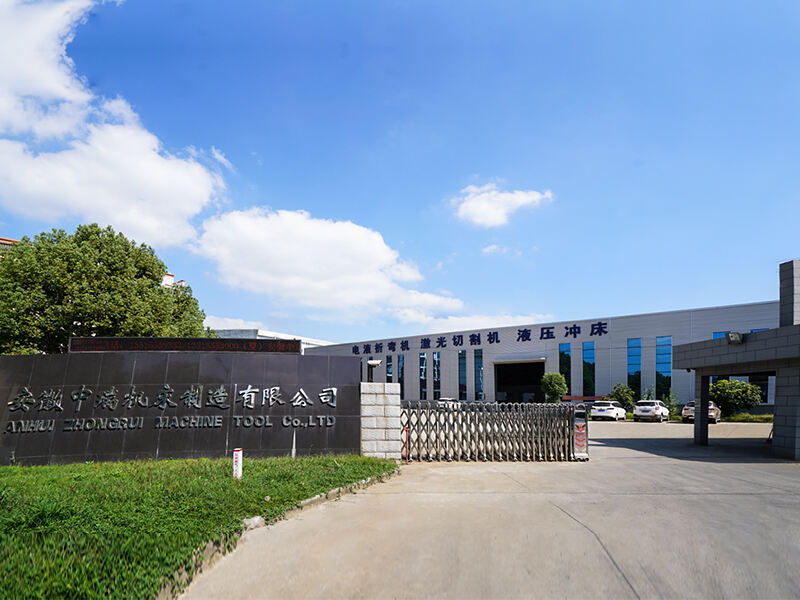
RAYMAX has been manufacturing metal processing machinery since its establishment in 2002, with over 22 years of experience, 400 factory personnel (60% middle and senior technical staff), and a global customer base of over 4,000 clients.
A 3-roll rolling machine is simpler and more economical, suitable for general sheet shaping and light-duty tasks. A 4-roll machine offers higher precision with integrated pre-bending, eliminating flat residual edges for pressure vessel fabrication and other high-accuracy applications.

Related Articles

Working Principle Of Tandem Press Brake

27

Nov

Working Principle Of Tandem Press Brake

View More
How To Use Fiber Laser Cutting Machine To Improve The Utilization Rate Of Sheet Metal?

27

Nov

How To Use Fiber Laser Cutting Machine To Improve The Utilization Rate Of Sheet Metal?

View More
The 136th RAYMAX Canton Fair was kicked off

27

Nov

The 136th RAYMAX Canton Fair was kicked off

View More
RAYMAX Shines at FABTECH, Smart Bending Shapes the Future!

19

Sep

RAYMAX Shines at FABTECH, Smart Bending Shapes the Future!

View More

Customer Reviews

Elizabeth Taylor

RAYMAX laser welding machine has been essential for our medical device assembly line. The non-contact welding with no electrode wear produces consistent, contamination-free joints on stainless steel sensor housings. The pulsed Nd:YAG laser with up to 300J per pulse creates weld spots as small as 0.3mm with minimal heat spread, preventing damage to sensitive internal components. The binocular microscope attachment provides 15x magnification for precision positioning. The closed-loop feedback system maintains constant laser energy output regardless of line voltage fluctuations. The built-in weld monitoring system records power, speed, and focus for each weld, providing complete traceability for our ISO 13485 certification. RAYMAX provided process validation support to optimize parameters for our specific application.

Lisa Chen

As a small fabrication shop, we couldn't justify the cost of high-end laser welders, but RAYMAX offered an affordable general-purpose model that meets our needs perfectly. The 1kW fiber laser welds thin metal sheets from 0.1mm to 3mm with manual operation. The compact design fits in our limited floor space. The simple controls reduced training time for our welders. The preloaded welding parameter library for 30+ material combinations helped us get started quickly. The machine has been reliable for our custom fabrication work including stainless steel kitchen equipment and aluminum frames. RAYMAX provided installation guidance and operator training. The cost savings on consumables compared to TIG welding have been significant. This is a great entry point into laser welding technology.

Get a Free Quote

Our representative will contact you soon.
Email
Mobile/WhatsApp
Name
Company Name
Message
0/1000
Non-Contact Welding for Diverse Industrial Applications

Non-Contact Welding for Diverse Industrial Applications

RAYMAX laser welding machine offers non-contact welding with no electrode wear, producing consistent and aesthetically pleasing welds for electronics, automotive, aerospace, and medical device industries. Covering fiber, CO₂, and semiconductor laser sources, this machine integrates seamlessly with automated production lines. The closed-loop feedback system maintains constant laser energy output regardless of line voltage fluctuations, ensuring weld consistency. With applications including battery pack assembly, sensor housing sealing, and automotive lightweight components, RAYMAX provides a complete welding solution for precision manufacturing needs.