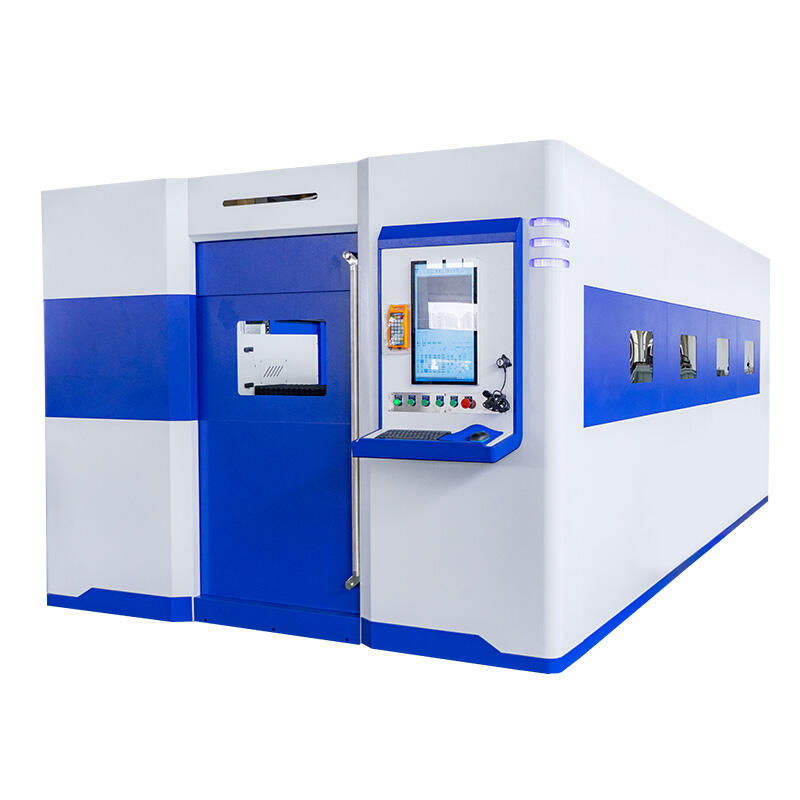
The automotive industry has embraced fiber laser cutter technology as an essential manufacturing tool for producing chassis components, body panels, structural reinforcements, and electric vehicle battery enclosures with unprecedented speed and precision. A modern automotive manufacturing plant processes thousands of sheet metal components daily, each requiring accurate dimensions and clean edges to ensure proper fit-up in subsequent assembly operations. Fiber laser cutters cut 1.5mm to 3mm automotive-grade high-strength steel at speeds 2 to 5 times faster than CO2 lasers, with the clean, burr-free edges eliminating the need for secondary deburring operations before welding. For high-strength steel components used in crash management systems, the minimal heat-affected zone of 0.05mm to 0.1mm preserves the martensitic structure of advanced high-strength steels, preventing the softening that occurs with plasma cutting or laser cutting with excessive heat input. This preservation of material strength directly impacts crash performance and occupant protection. For electric vehicle battery tray manufacturing, where aluminum components must be cut to precise dimensions for proper assembly and sealing, fiber laser cutters produce oxidation-free edges using nitrogen assist gas, achieving surface finishes that require no secondary polishing and maintaining the material’s corrosion resistance essential for battery enclosure integrity. 3D fiber laser cutting systems cut multi-dimensional automotive components such as door inner panels, instrument panel supports, and A-pillar reinforcements with complex geometries that would be impossible to produce with traditional stamping or mechanical cutting methods. Laser tube cutting machines integrated into automotive production lines replace saws, drills, and milling machines with a single automated step, cutting complex bevels and interlocks on seat frames and exhaust system components, allowing tubes to fit together perfectly for subsequent welding, improving structural rigidity while reducing weight. A case study of a Tier 1 automotive parts supplier documented a 60 percent reduction in cutting time and a 40 percent reduction in material waste after upgrading to a fiber laser cutter from previous plasma cutting equipment. Contact our automotive industry specialists to discuss fiber laser cutter configurations optimized for body panel, chassis, and battery component production.
 EN
EN