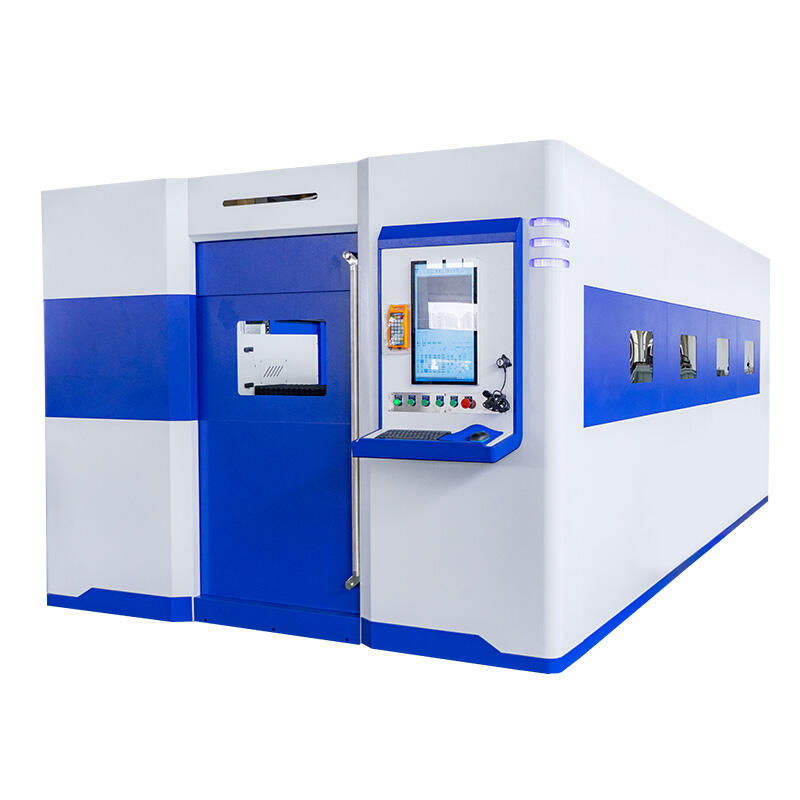
Nesting software integration with fiber laser cutters has emerged as one of the most effective strategies for reducing material waste and improving overall production economics in metal fabrication. Modern nesting software goes beyond simple layout planning, using smart algorithms that study part geometry, analyze spacing requirements, and automatically arrange multiple parts on a metal sheet to maximize material utilization. Advanced nesting software integrated with fiber laser cutters arranges parts to reduce material scrap by 10 to 15 percent, with a documented case showing a light industry client making electrical enclosures reduced material waste by 12 percent, translating to annual savings of 8,000 dollars. The nesting software supports common line cutting between different parts, where adjacent parts share a single cut line, eliminating the material waste that would otherwise exist between parts and reducing cutting time by eliminating redundant cuts. In-part nesting is another advanced feature that allows smaller parts to be cut within the waste area of larger parts, dramatically improving overall material utilization on sheets with complex part mixes. For a Western European automotive client cutting chassis components, advanced nesting software reduced material scrap by 15 percent, translating to annual savings of 12,000 dollars. The software supports automatic, semi-automatic, and manual nesting modes, giving operators flexibility to balance material utilization against production speed requirements, with automatic mode typically achieving 80 to 90 percent of maximum theoretical utilization. For high-mix, low-volume production environments where many different part numbers are processed each day, the nesting software integrates with the fiber laser cutter’s CNC system to pull production orders directly from the factory MES, generate optimized layouts, and begin cutting with minimal operator intervention. The software also supports true shape nesting for irregularly shaped parts, rotating and positioning components to find the most efficient arrangement on each sheet, with algorithms that consider grain direction requirements for subsequent forming operations. For job shops processing a wide variety of part geometries, material utilization rates of 80 to 85 percent are achievable with advanced nesting software, compared to 65 to 70 percent with manual layout methods. The software also optimizes the cutting sequence to minimize head travel time between cuts, reducing total cutting time by 5 to 10 percent beyond the savings from material utilization improvements. The return on investment period for nesting software is typically measured in months rather than years, as the material savings alone often justify the software investment within the first production year. For manufacturers processing 50,000 dollars or more of raw material monthly, a 10 percent reduction in scrap represents 60,000 dollars in annual savings, far exceeding typical software costs. Contact us to schedule a demonstration of our nesting software capabilities and receive a material savings estimate based on your specific part geometries and production volumes.
27
Nov
27
Nov
19
Sep
 EN
EN