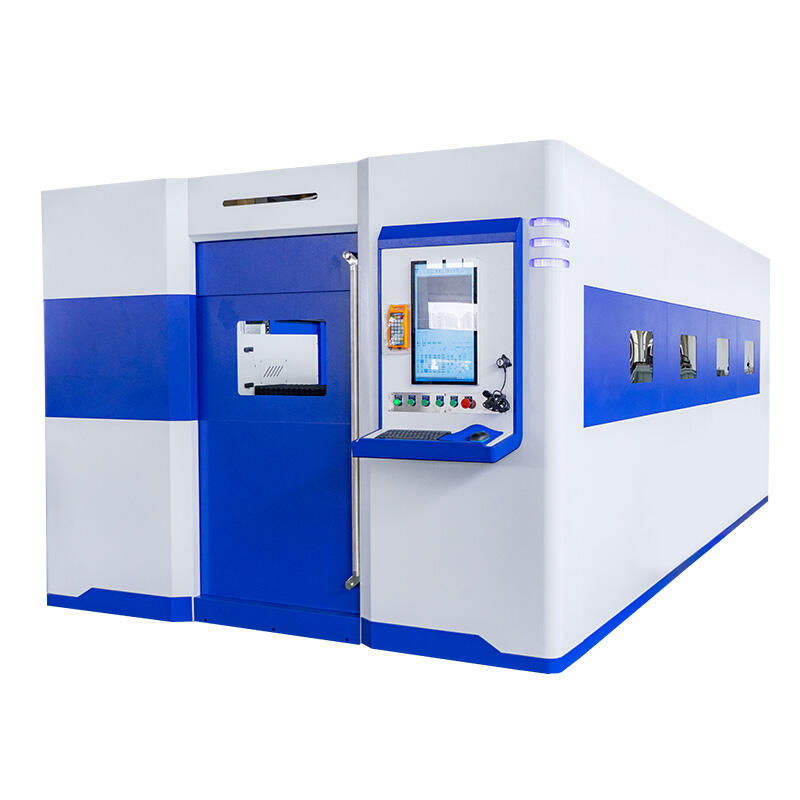
Dissimilar metal welding represents one of the most technically demanding applications for fiber laser welding machines, as joining metals with different melting points, thermal expansion coefficients, and metallurgical compatibility requires precise control of heat input and weld pool dynamics. Steel-to-aluminum welding is commonly required in automotive lightweighting applications where aluminum body panels attach to steel structural frames. Fiber laser welding machines accomplish this challenging joint by offsetting the laser beam toward the steel side, melting the steel while using conducted heat to melt the aluminum, limiting intermetallic compound layer thickness to under 10 micrometers for acceptable joint strength. Copper-to-steel welding for electrical busbar connections in power distribution equipment benefits from fiber laser welding's high energy density, which rapidly establishes a keyhole through both materials before heat conduction can degrade the copper's electrical properties. The optimal welding strategy for copper-to-steel involves beam oscillation with amplitudes of 0.5 to 1.0 millimeters, ensuring complete mixing of the two materials in the weld pool while avoiding the formation of brittle copper-steel intermetallics. Titanium-to-stainless steel welding, required for certain aerospace and medical device assemblies, is particularly challenging due to the formation of brittle iron-titanium intermetallic compounds that severely reduce joint ductility. Fiber laser welding machines equipped with beam oscillation and high travel speeds above 3 meters per minute limit intermetallic formation to a thin layer less than 5 micrometers thick, achieving joint strengths approaching 80 percent of the weaker base material. Nickel alloy to stainless steel welding for heat exchanger and chemical processing equipment is readily accomplished with fiber laser welding machines, as the similar melting characteristics and metallurgical compatibility of these materials allow conventional keyhole welding parameters. Contact our dissimilar metal welding specialists to discuss your material combinations and receive process feasibility recommendations.
27
Nov
27
Nov
19
Sep
 EN
EN