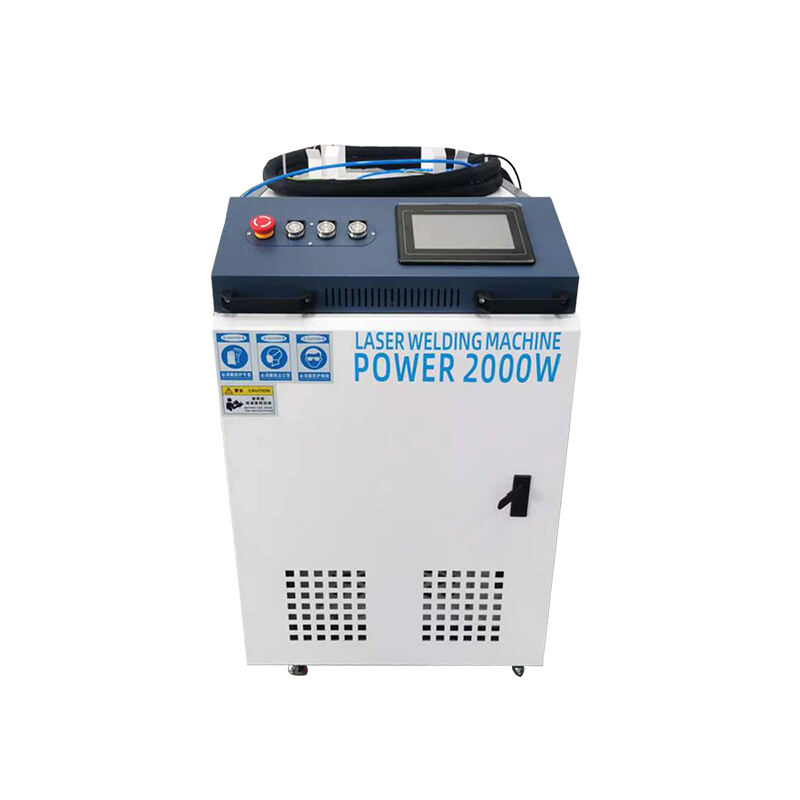
The automotive industry has rapidly adopted fiber laser welding machines as a cornerstone technology for electric vehicle battery pack assembly, chassis fabrication, and body-in-white construction. Battery tab welding represents one of the most demanding applications in EV manufacturing, requiring hermetic seals with leakage rates below 5×10⁻⁷ Pa·m³/s to ensure long-term battery safety and performance. Fiber laser welding machines achieve this level of seal integrity consistently through precise control of laser pulse parameters, maintaining penetration depth accuracy within plus or minus 0.05 millimeters across thousands of weld cycles. Aluminum chassis components present unique welding challenges due to the material's high reflectivity and thermal conductivity, which historically required high-power CO2 lasers or specialized arc welding procedures. Modern fiber laser welding machines equipped with wobble oscillation technology overcome these challenges by moving the laser beam in programmed circular or figure-eight patterns during welding, stabilizing the keyhole and reducing porosity formation. For structural battery packs where cell-to-busbar connections number in the hundreds per module, automated fiber laser welding systems equipped with vision guidance complete weld cycles in under two seconds per joint, achieving production throughput rates exceeding 1,000 welds per hour. High-strength steel components used in crash management systems benefit from fiber laser welding's low heat input, which preserves the martensitic structure of advanced high-strength steels and prevents softening in the heat-affected zone. Contact our automotive applications team to learn how fiber laser welding can improve your EV battery assembly and structural welding operations.
27
Nov
27
Nov
27
Nov
27
Nov
 EN
EN