Customized services to meet individual needs
metal laser welding machine-0
metal laser welding machine-1

RAYMAX Laser Welding Machine – Seam Tracking with Structured Light for Lap Welds on Car Body Panels

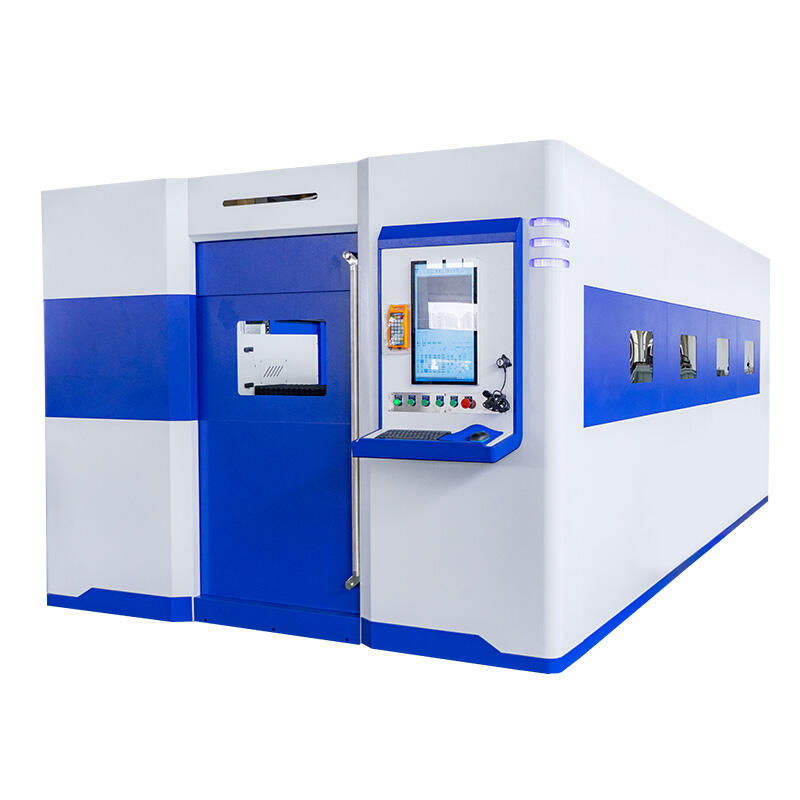
RAYMAX laser welding machine integrates a structured light sensor that projects a laser line onto the workpiece and detects seam position in real time, automatically guiding the welding head along lap joints, butt joints, and fillet welds. This system compensates for part misalignment up to ±1.5mm. The 2kW fiber laser welds 1.5mm automotive steel at 5 m/min. A teach mode allows manual recording of complex paths. Applications include automotive body-in-white assembly, appliance cabinet welding, and battery tray fabrication. RAYMAX offers a demo program where customers send sample parts for seam tracking validation before ordering.
Get A Quote

Why choose us?

Non-Contact Welding for Heat-Sensitive Applications

RAYMAX laser welding machine covers fiber, CO₂, and semiconductor laser sources, delivering non-contact welding with no electrode wear and beautiful, consistent welds. The pulsed Nd:YAG laser (up to 300J per pulse) produces weld spots as small as 0.3mm with minimal heat spread, making it suitable for heat-sensitive electronic components and medical device assemblies. The closed-loop feedback system maintains constant laser energy output regardless of line voltage fluctuations, ensuring weld consistency across production batches. Applications include battery pack assembly, sensor housing sealing, and micro-switch contacts. The machine includes a built-in weld monitoring system that records power, speed, and focus for each weld, enabling traceability for ISO-certified processes. RAYMAX provides application training and process optimization support as part of every installation.

Seam Tracking for Automated Production Lines

RAYMAX laser welding machine integrates a structured light sensor that projects a laser line onto the workpiece and detects seam position in real time, automatically guiding the welding head along lap joints, butt joints, and fillet welds. This system compensates for part misalignment up to ±1.5mm, reducing rework and scrap. The 2kW fiber laser welds 1.5mm automotive steel at 5 m/min, while a teach mode allows manual recording of complex paths. Applications include automotive body-in-white assembly, appliance cabinet welding, and battery tray fabrication. RAYMAX offers a demo program where customers send sample parts for seam tracking validation before ordering. The system integrates seamlessly with automated production lines for electronics, automotive, aerospace, and medical device industries.

Welding of Dissimilar Metals with Intermetallic Control

RAYMAX laser welding machine features a special pulse shaping algorithm that controls heat input to minimize intermetallic compound formation when welding dissimilar metals such as steel to aluminum or copper to brass. The 2kW fiber laser with beam oscillation achieves strong joints (70% of base metal strength) for demanding applications. Applications include battery terminals (copper to aluminum), automotive lightweight structures, and electrical busbars. The machine's precise energy control allows welding of galvanized steel without burning off the zinc coating, and joining of titanium alloys for aerospace components. RAYMAX provides a process validation report for each dissimilar metal combination. This laser welding machine opens new possibilities for multi-material design in automotive, aerospace, and renewable energy industries.

Related products

The integration of laser welding machines with Industry 4.0 and smart factory systems is transforming metal joining from isolated machine operation to fully connected, data-driven manufacturing. In 2025, CNC machines are no longer standalone units but part of fully integrated smart factories, connected through data, sensors, and automation. Modern laser welding machines connect to factory MES systems via the OPC UA protocol, turning what was once an isolated welding machine into a gateway to Industry 4.0, ready to connect with MES systems and future automation lines. IoT sensors integrated into modern laser welding machines provide exceptional operational visibility, monitoring parameters including applied laser power through photodiodes to ensure correct power delivery for different materials and thicknesses, weld penetration depth through optical coherence tomography sensors, cooling system temperatures to identify potential issues before failures occur, and assist gas pressure and flow rates to ensure optimal shielding conditions. The data collected by these sensors feeds into centralized monitoring systems, where it is analyzed against performance benchmarks in real-time, enabling automatic adjustments to maintain optimal welding conditions. The accumulated data also forms a historical record, offering insights into long-term performance and areas for improvement. Predictive maintenance systems use sophisticated algorithms to transform operational data into actionable maintenance intelligence, continuously analyzing performance metrics against established baselines to identify subtle deviations that suggest developing issues. Machine learning algorithms process this information alongside historical maintenance records to calculate component failure probabilities, allowing maintenance teams to schedule interventions during planned downtime rather than responding to unexpected breakdowns. Remote diagnostic capabilities allow laser welding machine manufacturers to analyze machine performance from distant locations, with technical specialists reviewing operational data, running diagnostic routines, and guiding on-site personnel through troubleshooting procedures without traveling to the customer facility. Cloud connectivity and remote diagnostics enable laser welding machines to support global manufacturing networks, with manufacturers able to monitor machines across multiple facilities from a central location. Offline programming software integrated with CAD/CAM systems allows programming of weld paths and parameters away from the machine, with programs transferred via USB, network, or cloud connection, maximizing production uptime. Vision cameras integrated into the welding head provide real-time seam tracking and post-weld inspection, automatically adjusting the welding path to compensate for part positioning variations and rejecting parts that do not meet quality standards. For manufacturers implementing full automation, laser welding machines can be interfaced with ERP, NAS, CAD, and CAM systems for seamless data flow from design to finished part, with the automated welding line connected to upstream cutting and forming equipment and downstream assembly operations. Our laser welding machines are equipped for Industry 4.0 connectivity, with interfaces for remote monitoring, predictive maintenance, and integration with factory automation systems. Contact us to discuss how our smart laser welding machine solutions can connect your welding operations to your digital manufacturing ecosystem.
Frequently Asked Questions

What is the difference between a swing beam and guillotine shearing machine?

A swing beam shearing machine uses a rotary blade motion and is suited for thinner sheets and high-speed production, while a guillotine shearing machine features vertical blade movement, offering higher precision (adjustable cutting angle 0.5~2°) for thick plates and heavy-duty applications.
A handheld welding machine is ideal for on-site welding, repairing large workpieces, welding difficult-to-move structures, steel structure field splicing, mold repair, and advertising sign welding, offering flexibility and ease of use without requiring professional welders.
RAYMAX holds ISO9001 certification and CE certification, ensuring all machines meet international quality and safety standards for design, manufacturing, inspection, and after-sales service.
An ironworker machine integrates punching, shearing, notching, and bending in a single setup. It can punch holes up to 32mm in diameter, shear 6-12mm steel plates, and achieve bending angles up to 135°, greatly reducing the need for separate machines.

Related Articles

Working Principle Of Tandem Press Brake

27

Nov

Working Principle Of Tandem Press Brake

View More
What Are The Differences Between CNC Press Brake And NC Press Brake?

27

Nov

What Are The Differences Between CNC Press Brake And NC Press Brake?

View More
The Ultimate Guide to Choosing the Right Press Brake Machine

The Ultimate Guide to Choosing the Right Press Brake Machine

Discover the types of press brake machines, including hydraulic, CNC, and hybrid designs. Learn about calculating press brake requirements and minimizing springback effects. Explore advanced features that enhance precision and safety in manufacturing.
View More
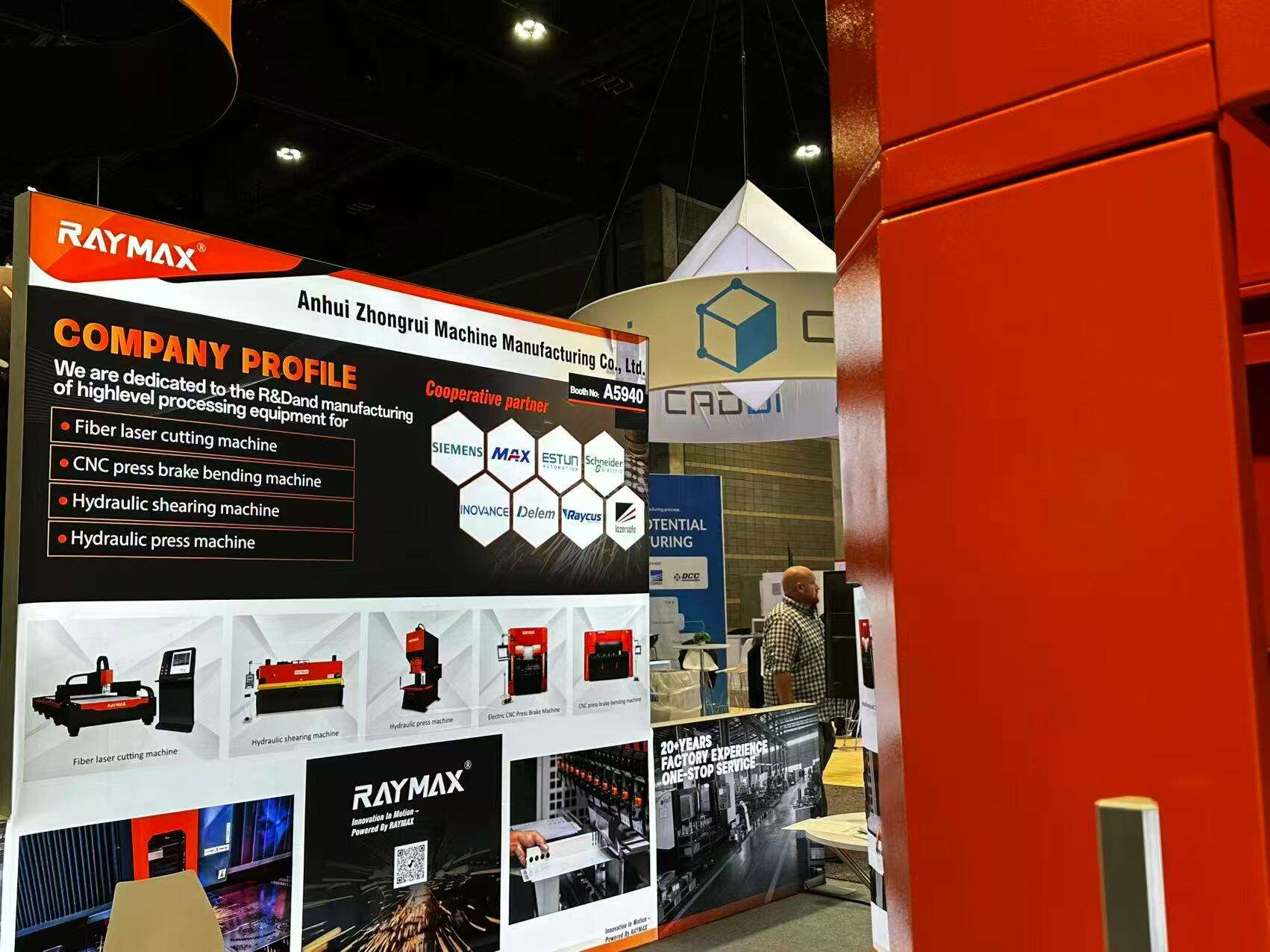
RAYMAX Shines at FABTECH, Smart Bending Shapes the Future!

19

Sep

RAYMAX Shines at FABTECH, Smart Bending Shapes the Future!

View More

Customer Reviews

John Wang

RAYMAX laser welding machine's special pulse shaping algorithm controls heat input to minimize intermetallic compound formation when welding copper to aluminum for our battery busbars. The 2kW fiber laser with beam oscillation achieves strong joints at 70% of base metal strength. The process validation report provided by RAYMAX documented the optimized parameters for our specific material combination. The welds show consistent penetration without excessive intermetallic layer thickness. The machine handles our high-volume production with reliable repeatability. The closed-loop feedback maintains weld quality across batch variations. The application engineer from RAYMAX spent time understanding our requirements and provided excellent support during initial setup. This machine has enabled our transition to multi-material lightweight designs.

Lisa Chen

As a small fabrication shop, we couldn't justify the cost of high-end laser welders, but RAYMAX offered an affordable general-purpose model that meets our needs perfectly. The 1kW fiber laser welds thin metal sheets from 0.1mm to 3mm with manual operation. The compact design fits in our limited floor space. The simple controls reduced training time for our welders. The preloaded welding parameter library for 30+ material combinations helped us get started quickly. The machine has been reliable for our custom fabrication work including stainless steel kitchen equipment and aluminum frames. RAYMAX provided installation guidance and operator training. The cost savings on consumables compared to TIG welding have been significant. This is a great entry point into laser welding technology.

Get a Free Quote

Our representative will contact you soon.
Email
Mobile/WhatsApp
Name
Company Name
Message
0/1000
Non-Contact Welding for Diverse Industrial Applications

Non-Contact Welding for Diverse Industrial Applications

RAYMAX laser welding machine offers non-contact welding with no electrode wear, producing consistent and aesthetically pleasing welds for electronics, automotive, aerospace, and medical device industries. Covering fiber, CO₂, and semiconductor laser sources, this machine integrates seamlessly with automated production lines. The closed-loop feedback system maintains constant laser energy output regardless of line voltage fluctuations, ensuring weld consistency. With applications including battery pack assembly, sensor housing sealing, and automotive lightweight components, RAYMAX provides a complete welding solution for precision manufacturing needs.