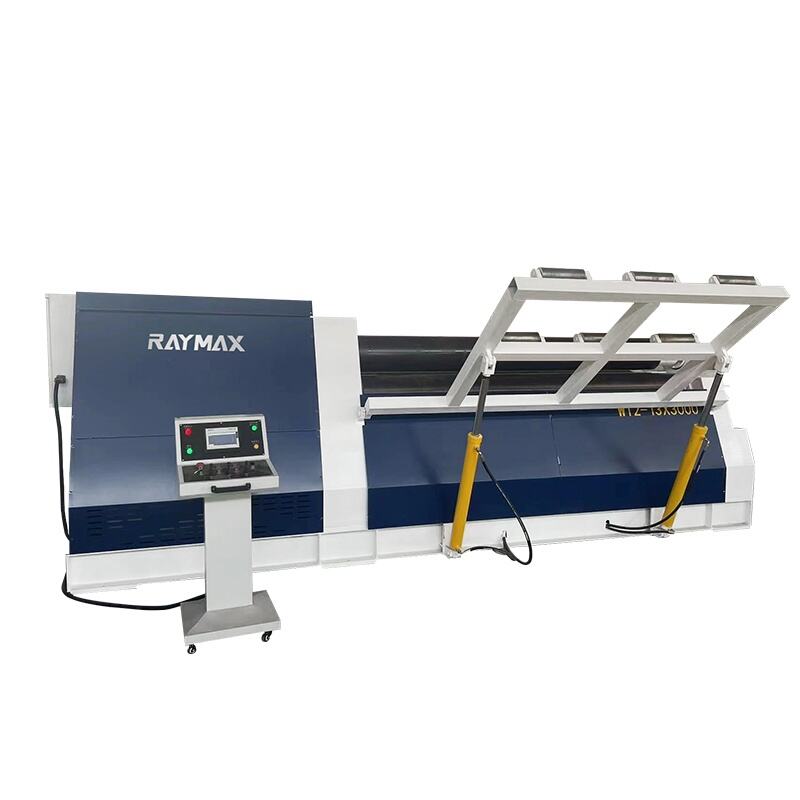
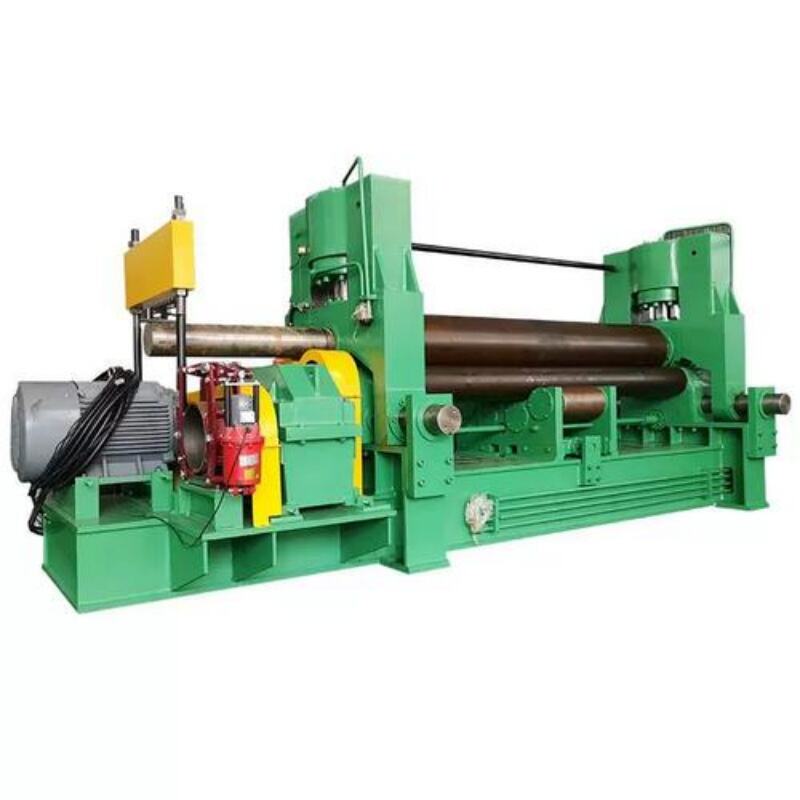
The fundamental physics of metal rolling involves applying bending force that creates plastic deformation through the material thickness, with the required tonnage directly proportional to plate thickness, width, and material yield strength. The rolling force can be estimated using the formula: F = C × σs × W × t² / D, where F is the required rolling force, C is a coefficient (typically 1.2–1.5 for 4-roll machines), σs is the yield strength of the material in MPa, W is the plate width in mm, t is the plate thickness in mm, and D is the minimum rolling diameter in mm. From this formula, several key relationships emerge: rolling force increases with the square of thickness, meaning thickness is the dominant factor in determining capacity; rolling force is proportional to yield strength, so stronger materials reduce effective capacity; rolling force is proportional to plate width, so wider plates require more force; and rolling force is inversely proportional to minimum rolling diameter, so smaller diameters are harder to roll. For example, a plate of mild steel (245 MPa yield strength) with 20mm thickness, 2000mm width, and a target diameter of 1000mm requires a specific rolling force that the machine must provide. For stainless steel, which has yield strength of approximately 520–700 MPa, capacity should be reduced by 30–50% compared to mild steel. For high-strength steel with yield strength over 700 MPa, capacity should be reduced by 50–70%. The machine’s rated capacity is typically specified for mild steel (245 MPa) with a rolling diameter of at least 20 times the plate thickness. Pre-bending capacity is typically 70–80% of rolling capacity on four-roll machines. Understanding these material-specific capabilities helps fabricators select equipment that reliably meets their production requirements. Contact our engineering team for assistance calculating your required rolling capacity based on your specific material and dimensional requirements.
27
Nov
27
Nov
27
Nov
27
Nov
 EN
EN