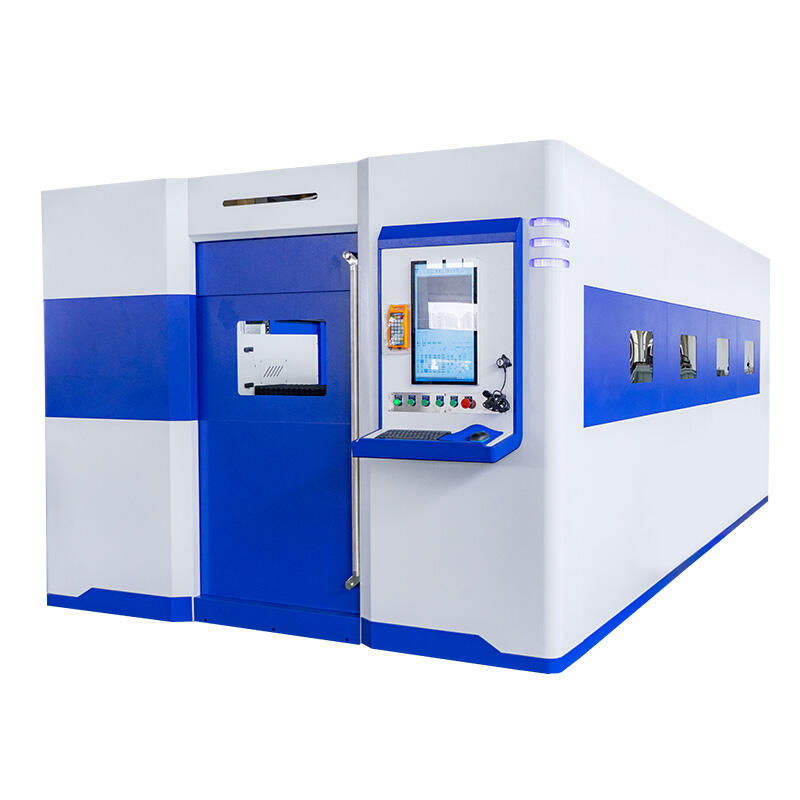
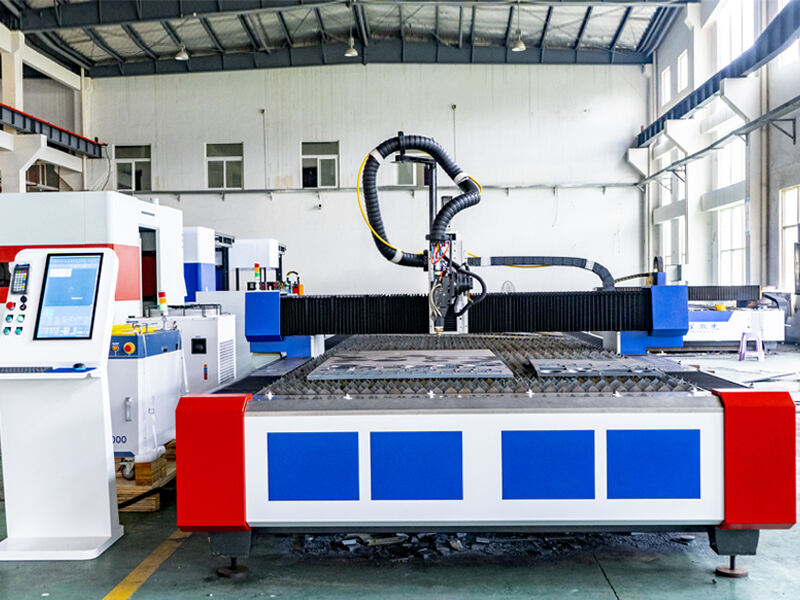
The automation of fiber laser cutters has transformed metal fabrication by reducing operator dependency while improving consistency, throughput, and overall equipment effectiveness. Automatic fiber laser cutters incorporate features including automatic sheet feeding systems, pallet changers, self-cleaning cutting heads, chip collection systems, and MES connectivity for remote monitoring and production management. The servo-driven automatic feeding system uses vacuum grippers for thin materials or mechanical clamps for thick carbon steel to retrieve metal sheets from a storage rack, position them on the cutting bed with high accuracy, and transfer finished parts to an offloading conveyor. A complete load and unload cycle for a 4000mm by 2000mm sheet can be completed in 65 to 90 seconds, enabling continuous operation with minimal operator intervention. The pallet changer system swaps full pallets of finished parts with empty ones in minutes, enabling unattended overnight operation for shipyards and power plants running round-the-clock production. A Middle Eastern shipyard using an automated fiber laser cutting system processes 15mm steel hull plates, producing over 500 parts per day with just two operators per shift, demonstrating the productivity gains achievable with modern automation. The self-cleaning cutting head wipes the protective lens every two hours with a microfiber pad, extending lens life by 30 percent and avoiding manual cleaning stops that would interrupt production. The built-in chip collection system suctions metal debris from the cutting bed during operation, preventing buildup that could scratch parts or damage the machine’s gantry system during extended production runs. For high-volume production environments, robotic part handling systems can load and unload parts automatically, with vision guidance to detect part position and orientation before cutting. Integration with factory MES systems via OPC UA protocol allows the fiber laser cutter to pull production orders, generate cutting programs from a digital library, optimize part nesting, and report production metrics including cut speed, number of parts produced, and machine uptime. A Southeast Asian power plant using this connectivity manages three fiber laser cutters from a central control room, reducing on-site oversight by 60 percent while maintaining 98 percent machine uptime. For clients with diverse product lines, the CNC system stores thousands of cutting programs, so switching between different part configurations takes less than five minutes, dramatically reducing setup time and improving overall equipment effectiveness. Automated part sorting and palletizing systems complete the automation chain, picking cut parts from the cutting bed, sorting them by part number, and stacking them on pallets for subsequent processing or shipment. Contact our automation engineering team to discuss automatic fiber laser cutter configurations tailored to your production volume, part complexity, and labor requirements.
27
Nov
27
Nov
27
Nov
 EN
EN