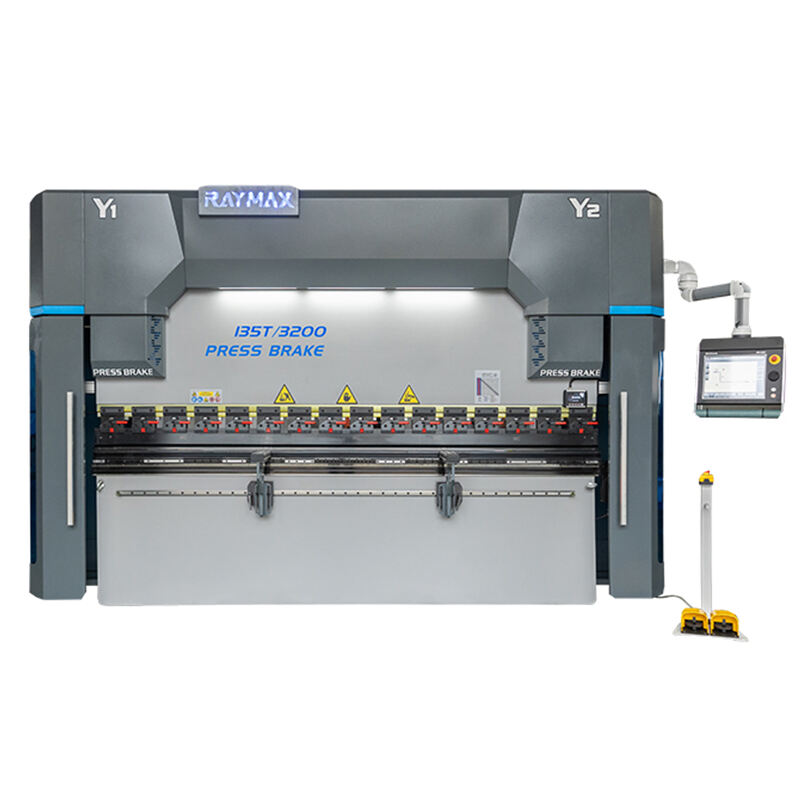
Deflection compensation, also known as crowning, is an essential feature on hydraulic press brakes that ensures consistent bend angles across the entire length of a workpiece. When a press brake applies tons of bending force, the frame, ram, and worktable undergo elastic deformation. The ram deflects upward in the middle while the worktable deflects downward, causing the punch and die to open slightly at the center. Without compensation, a long workpiece will have a smaller bend angle in the middle than at the ends, resulting in bowed or inconsistent parts that may not meet specifications or assemble properly. Crowning, also known as deflection compensation, is a deliberate, precise, and proactive counter-deformation method. The central concept is to engineer a subtle convex arc to offset the deflection of the beam and table. CNC crowning systems automatically calculate compensation values based on the bending force required for the specific material thickness, type, and bend length. The CNC controller uses algorithms that consider tooling geometry, workpiece dimensions, and material properties to determine the exact compensation profile needed to maintain a straight bend line. Two main types of crowning systems are available for hydraulic press brakes. Hydraulic crowning uses one or more cylinders in the lower beam of the press brake, with deformation adjustable per cylinder to create a bulge in the lower beam. Hydraulic crowning provides dynamic real-time compensation, is adaptive to material thickness fluctuations, offers high integration and low maintenance cost, and is suitable for high dynamic load scenarios such as high-strength sheet bending. Mechanical crowning pre-bends the bed through mechanical structure such as screws or cams or CNC motors to compensate for deflection. Mechanical crowning supports pre-installation on new machines or modification of old machines, adapts to hydraulic or manual clamping needs, and offers accuracy levels with digital readout better than analog, and drive mode with CNC better than hand crank. The CNC system calculates the required crowning based on the load force during bending, which causes deflection, and automatically adjusts the wedges' positions. For bending long workpieces of 2 meters or more, proper crowning compensation is not optional but essential for achieving specification-compliant parts. Our hydraulic press brakes feature electric crowning systems with 100 percent constant bending angle capability, compatible with 60mm and 90mm European-style molds. The system provides precise positioning and alignment of the crowning table for user-friendly operation. Contact us to discuss deflection compensation requirements for your specific workpiece lengths and materials.
27
Nov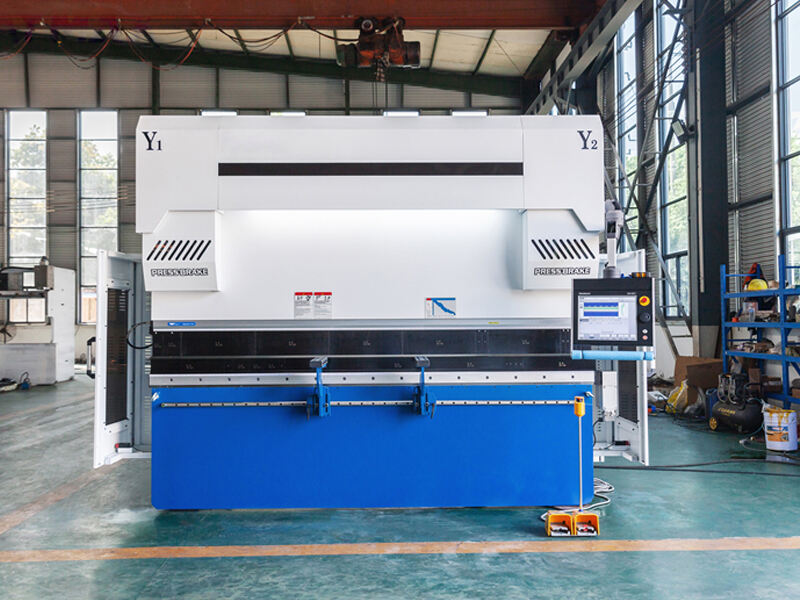
27
Nov
27
Nov
19
Sep
 EN
EN