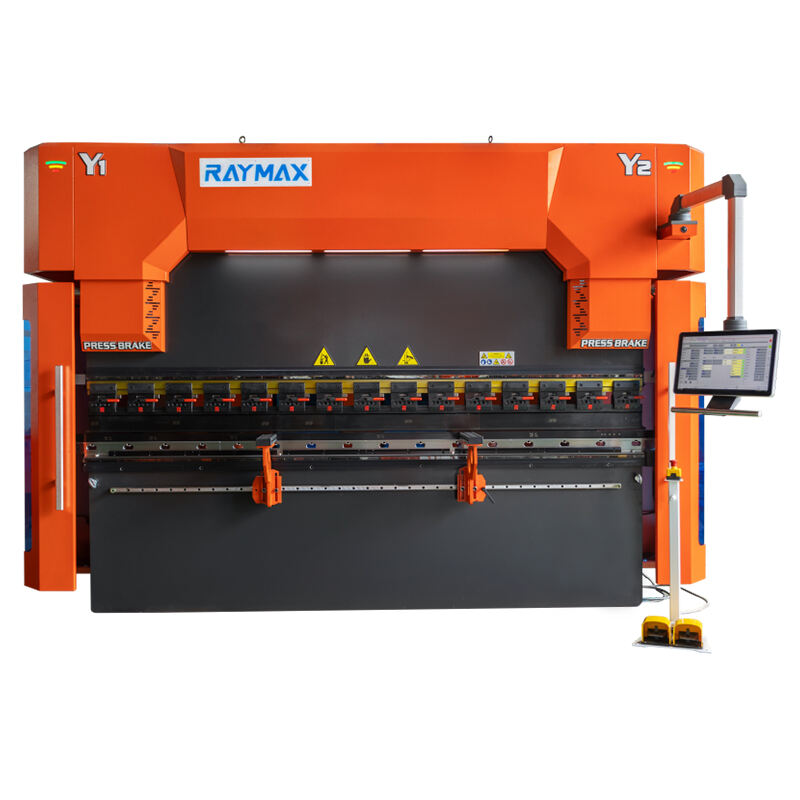
Customized services to meet individual needs
laser welder and cutter-0
laser welder and cutter-1

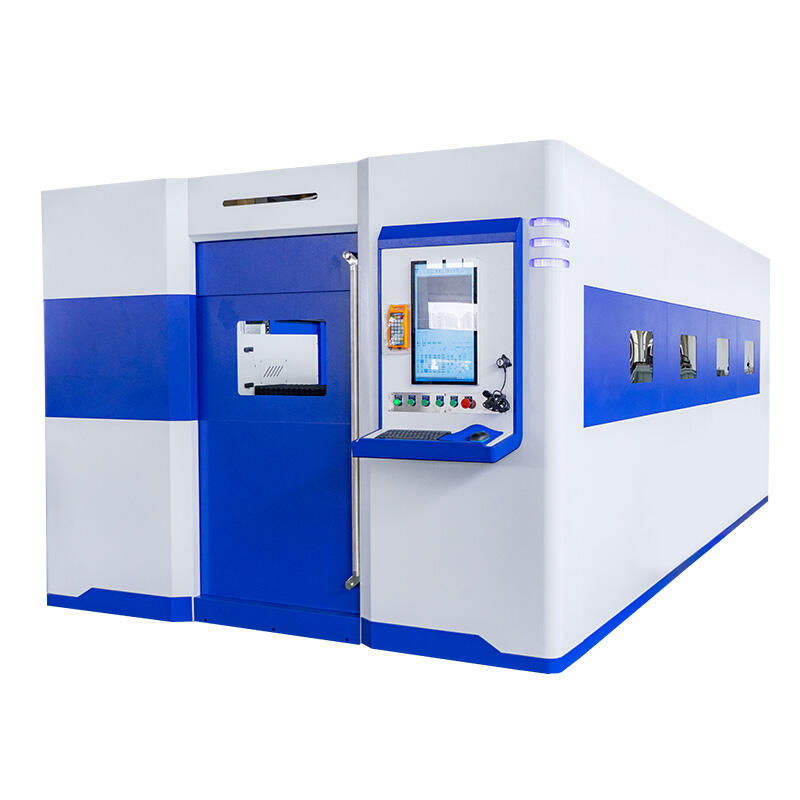
RAYMAX Fiber Laser Cutter – Dual-Power Source (3kW + 1kW) for Combined Cutting and Engraving

RAYMAX fiber laser cutter features a unique dual-power source configuration: a 3kW main laser for cutting and a 1kW secondary laser that can be directed through a separate optical path for deep engraving or surface marking without changing the main cutting parameters. The CNC software switches between sources automatically based on layer color in the DXF file. This allows parts with both cut edges and engraved logos/text in one fixturing. Working area 1500mm x 3000mm. Applications include personalized metal gifts, control panels, and machine nameplates. RAYMAX provides a library of engraving patterns and fonts. The dual-source configuration also provides redundancy: if one source fails, the other can perform basic cutting.
Get A Quote

Why choose us?

High-Speed Cutting with 120m/min Rapid Travel

RAYMAX fiber laser cutter achieves rapid traverse speeds of up to 120m/min with acceleration of 1.0G, dramatically reducing cycle times for high-volume production. Our open-type fiber laser cutter integrates plate and tube cutting in one machine, featuring fast cutting speed, small cutting seam, minimal deformation, and a smooth, flat surface that requires no post-processing. The machine is equipped with an automatic focal length tracking and adjustment system that easily handles twisted or deformed materials, with cutting thickness up to 50mm for most metals. A 3000W model cuts 10mm carbon steel at 1.2m/min, delivering 3x faster speeds than CO₂ lasers with 40% less power consumption. Widely used in sheet metal processing, electrical cabinet production, and kitchenware manufacturing, our fiber laser cutter boosts productivity while lowering energy costs.

Automatic Focus Control for Optimal Cut Quality

RAYMAX fiber laser cutter includes a motorized focus control that automatically adjusts the focal point position based on material thickness, moving the focus from +2mm (above surface) for thin sheet to -5mm (below surface) for thick plate. This optimizes cut quality across the entire thickness range (0.5–30mm) without manual intervention. The capacitive height sensor maintains a constant 0.3-0.5mm standoff from the metal surface, preventing collisions with warped plates. The autofocus cutting head eliminates manual focus adjustments, reducing setup time and improving cut consistency for job shops that handle diverse materials. RAYMAX provides a free cutting test on customer-supplied samples to demonstrate cut quality and speed before purchase. The machine is compatible with CAD/CAM software for seamless workflow integration.

Reflective Metal Cutting Without Back-Reflection Damage

RAYMAX fiber laser cutter effectively processes reflective metals like copper, brass, and aluminum without the beam instability issues faced by CO₂ lasers, showcasing superior material versatility. The 1070nm wavelength is highly absorbed by non-ferrous metals, enabling cutting of aluminum up to 20mm, brass up to 12mm, and copper up to 8mm without back-reflection damage. The fiber-optic delivery system eliminates optical drift, ensuring consistent beam quality regardless of material reflectivity. A Southeast Asian power plant using three RAYMAX fiber laser cutting machines from a central control room reduced on-site oversight by 60% while maintaining 98% machine uptime. Perfect for electric vehicle battery trays, LED heatsinks, and aerospace honeycomb panels. RAYMAX provides a 2-year warranty on the laser source.

Related products

Troubleshooting common fiber laser cutter issues requires systematic diagnosis and prompt corrective action to minimize production downtime. Poor cut quality characterized by excessive dross formation on the bottom edge of the workpiece typically indicates incorrect cutting parameters, with possible causes including excessive cutting speed, insufficient laser power for the material thickness, incorrect focus position, or contaminated assist gas. Reducing cutting speed by 10 to 20 percent or increasing laser power by 5 to 10 percent often resolves dross issues on carbon steel, while for stainless steel, switching from compressed air to nitrogen assist gas may be required to achieve a clean, oxidation-free edge. Incomplete cutting or failure to penetrate through the material thickness suggests insufficient laser power, incorrect focus position, or assist gas pressure that is too low or too high. Verify that the focus position is correctly set for the material thickness, with typical focus positions ranging from -2mm for thick stainless steel to +2mm for thin carbon steel. Excessive burr formation along the cut edge points to incorrect nozzle alignment, damaged nozzle, or improper focus position. The nozzle should be inspected daily for debris or damage, and the beam alignment should be verified using the alignment tool, with centering accuracy required within 0.1mm. Uneven cut quality across the cutting area may indicate contamination of the protective glass window, which scatters the beam and reduces power density at the workpiece. The protective glass should be inspected and cleaned or replaced every 8 hours of operation, or more frequently in high-production environments. Material slipping or shifting during cutting indicates insufficient clamping pressure or worn support slats on the cutting bed, addressed by checking clamp pressure settings and inspecting support slats for wear or damage that could allow material movement. Assist gas-related issues such as insufficient pressure or contaminated gas cause oxidation on stainless steel cuts or excessive dross on carbon steel cuts. Verify that gas supply pressures meet manufacturer specifications, typically 10 to 15 bar for nitrogen cutting of stainless steel and 6 to 8 bar for oxygen cutting of carbon steel, and check gas purity levels of 99.5 percent or higher for nitrogen and 99.9 percent or higher for oxygen. Cooling system alarms indicate low coolant levels, inadequate flow, or excessive temperature. The chiller should be inspected weekly, with coolant levels maintained and conductivity kept below 30 microsiemens per centimeter for deionized water systems. Laser power degradation over time may indicate aging of the laser source diodes, with typical diode lifetime of 50,000 to 100,000 hours depending on operating conditions and power levels. Regular power calibration verification using a power meter every 500 operating hours helps detect degradation early. Electrical issues such as machine not starting, CNC controls not responding, or safety systems tripping require verification of input voltage, inspection of control fuses, checking of emergency stop circuit continuity, and testing of light curtain and interlock switch function. Our technical support team provides remote and on-site assistance for fiber laser cutter troubleshooting, helping fabricators minimize downtime and restore production quickly. Contact us to discuss maintenance and support options for your fiber laser cutter equipment.
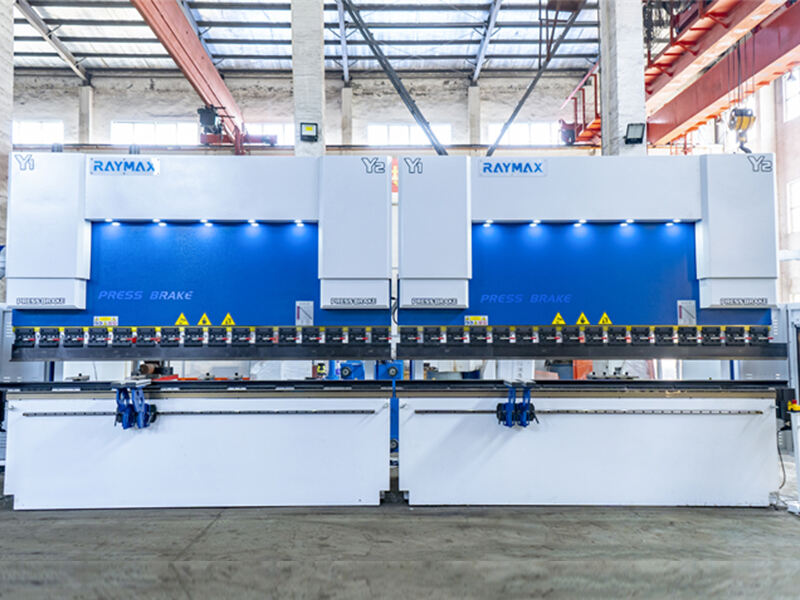
Frequently Asked Questions

How does a CNC press brake improve bending precision?

A CNC press brake achieves bending angle tolerances of ±0.1° and repeat positioning accuracy up to ±0.01mm through CNC automatic control, CAD drawing import, automatic angle compensation, and deflection compensation features.
RAYMAX press brake machines are available with bending force capacities from 40 tons up to 2,000 tons, with working lengths ranging from 1600mm to 12,000mm, enabling them to handle everything from small precision parts to heavy plate bending.
A servo press brake saves 30% to 60% energy compared to traditional hydraulic press brakes, thanks to servo motors and ball screws/servo pump systems that use power only during the bending process rather than continuously idling.
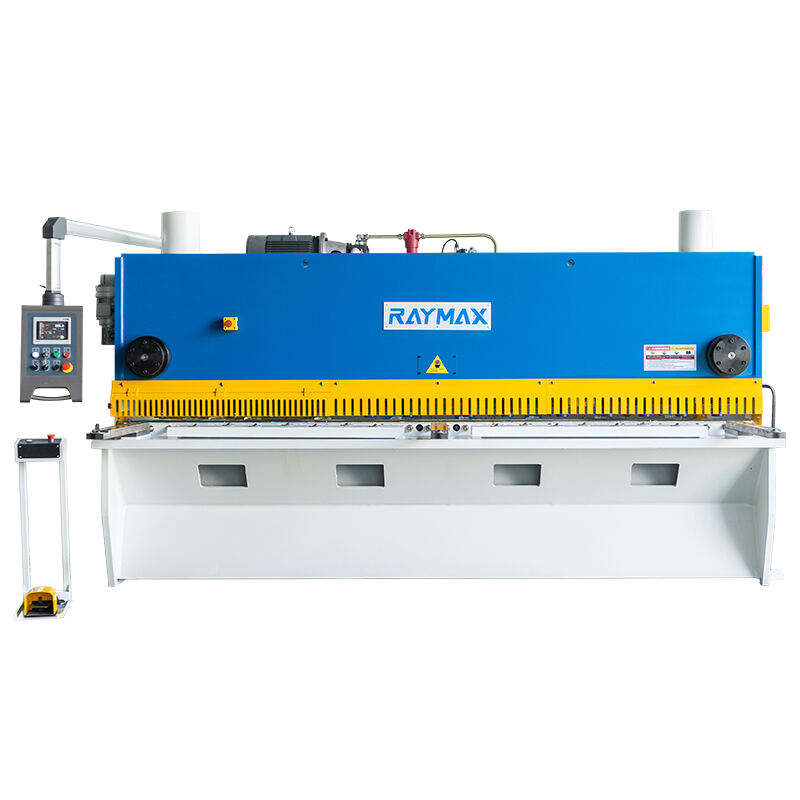
A swing beam shearing machine uses a rotary blade motion and is suited for thinner sheets and high-speed production, while a guillotine shearing machine features vertical blade movement, offering higher precision (adjustable cutting angle 0.5~2°) for thick plates and heavy-duty applications.

Related Articles

Working Principle Of Tandem Press Brake

27

Nov

Working Principle Of Tandem Press Brake

View More
What Are The Differences Between CNC Press Brake And NC Press Brake?

27

Nov

What Are The Differences Between CNC Press Brake And NC Press Brake?

View More
The Ultimate Guide to Choosing the Right Press Brake Machine

The Ultimate Guide to Choosing the Right Press Brake Machine

Discover the types of press brake machines, including hydraulic, CNC, and hybrid designs. Learn about calculating press brake requirements and minimizing springback effects. Explore advanced features that enhance precision and safety in manufacturing.
View More
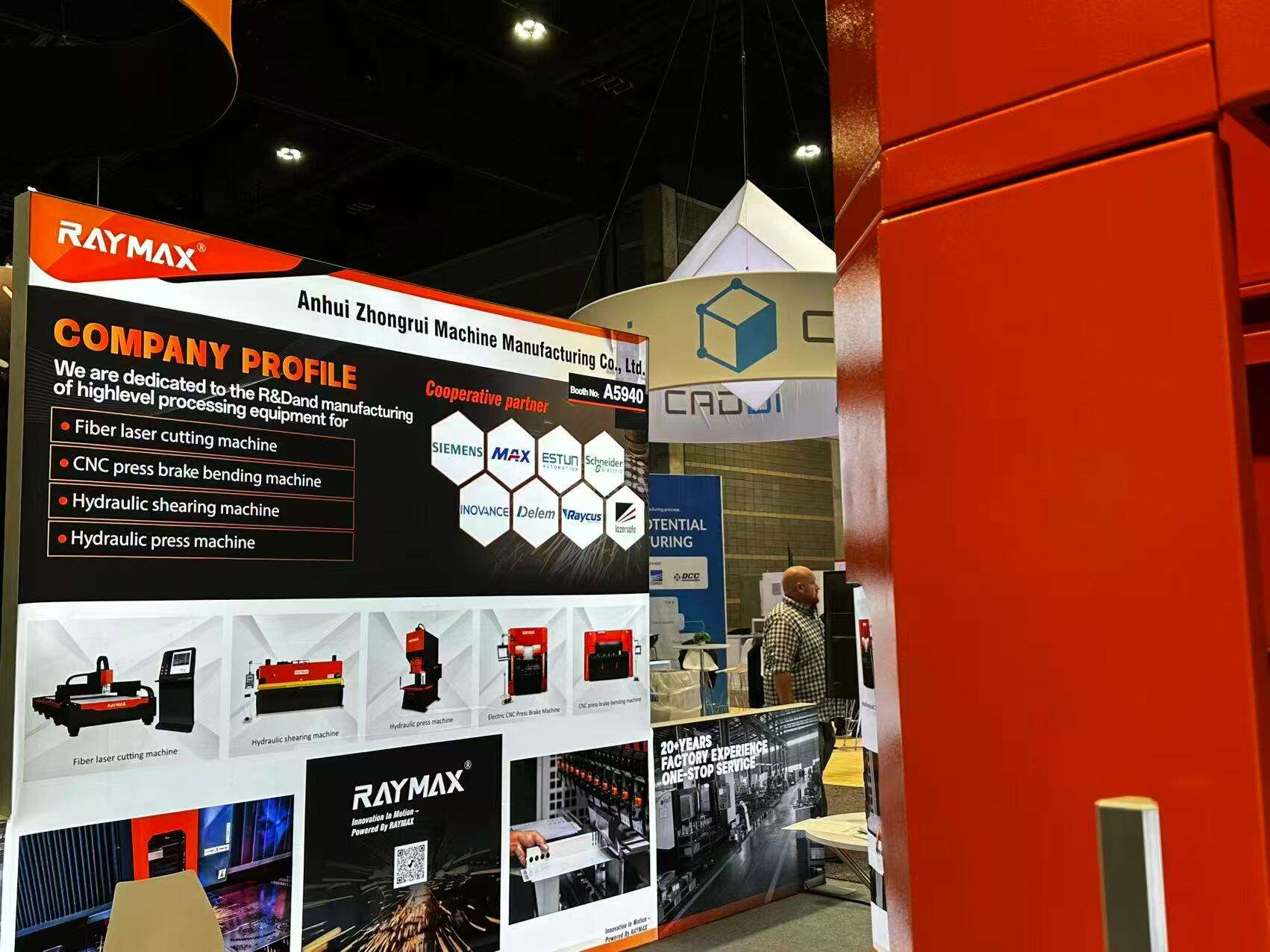
RAYMAX Shines at FABTECH, Smart Bending Shapes the Future!

19

Sep

RAYMAX Shines at FABTECH, Smart Bending Shapes the Future!

View More

Customer Reviews

Anna Kowalski

The 120m/min rapid traverse speed and 1.0G acceleration of RAYMAX fiber laser cutter dramatically reduced our cycle times for high-volume production. The machine cuts 2mm stainless steel at 18 m/min for our electronics enclosures. The open-type design integrates plate and tube cutting, processing both in one machine. The automatic focal length tracking handles twisted materials without stopping. The chip collection system keeps the cutting bed clean during extended runs. The machine has been running 16 hours daily for over a year with minimal downtime. The Fanuc CNC system is reliable and precise. RAYMAX's installation team ensured everything was calibrated correctly. This machine has become the centerpiece of our sheet metal fabrication operation.

Bruce Zhang

RAYMAX 6kW fiber laser cutter cuts 40mm mild steel with oxygen assist at 0.8 m/min, meeting our heavy plate requirements for mining equipment parts. The edge squareness is better than 0.5mm, and the cut quality requires minimal secondary processing. The high-torque servo drives on X and Y axes provide stable motion even under heavy cutting loads. The fully enclosed cutting area with Class 1 laser safety certification meets our safety standards. The fume extraction system with HEPA filter keeps our shop air clean. The machine includes a consumables kit and 12-month warranty on the laser source. RAYMAX's engineering team helped us select the right power level for our material thickness range. This machine has opened new capabilities for our heavy fabrication shop.

Get a Free Quote

Our representative will contact you soon.
Email
Mobile/WhatsApp
Name
Company Name
Message
0/1000
Integrated Plate and Tube Cutting in One Machine

Integrated Plate and Tube Cutting in One Machine

RAYMAX fiber laser cutter integrates plate and tube cutting capabilities in one machine, featuring a focal length automatic tracking and adjustment system that handles twisted or deformed materials. With positioning accuracy of ±0.03mm/m and repeated positioning accuracy of ±0.02mm, this machine cuts most metal materials up to 50mm thickness. The CNC system with professional auxiliary control software makes operation simple and convenient. Imported servo motors and precision guide rails provide high cutting accuracy, stability, and long service life, suitable for sheet metal processing, automotive parts, kitchenware, and electronic components.