A CNC press brake is a computer-controlled metal forming machine that bends sheet metal and plate materials with exceptional precision and repeatability. Unlike manual or NC press brakes that rely heavily on operator skill for accuracy, a CNC press brake uses programmable logic to control the ram position, bending angle, backgauge positioning, and bend sequence automatically. The core components of a CNC press brake include a robust steel frame that withstands bending forces without excessive deflection, a hydraulic or electric servo drive system that powers ram movement, a CNC controller that serves as the machine's brain and stores programs for different parts, a multi-axis backgauge that positions the workpiece precisely for each bend, and tooling including punches and dies that contact the metal directly. The working principle involves clamping a metal sheet between a punch and a die, then applying force to create plastic deformation that results in a permanent bend. The bend angle is determined primarily by how far the punch penetrates into the die opening, a relationship that the CNC system calculates based on material properties, thickness, and desired angle. Modern CNC controllers allow operators to program bending sequences, simulate the process in 3D to detect collisions before cutting metal, and store hundreds or thousands of part programs for rapid recall. For manufacturers transitioning from manual bending methods, the productivity improvement is substantial: CNC press brakes achieve angle tolerances of ±0.1 degrees and repeat positioning accuracy up to ±0.01mm, far exceeding what human operators can achieve consistently across production batches. The scrap rate can be reduced to less than 0.5 percent compared to traditional methods, and the accident rate is reduced by 90 percent through closed-loop safety control systems. Contact us for detailed specifications on our CNC press brake configurations tailored to your specific metal processing requirements.
27
Nov
27
Nov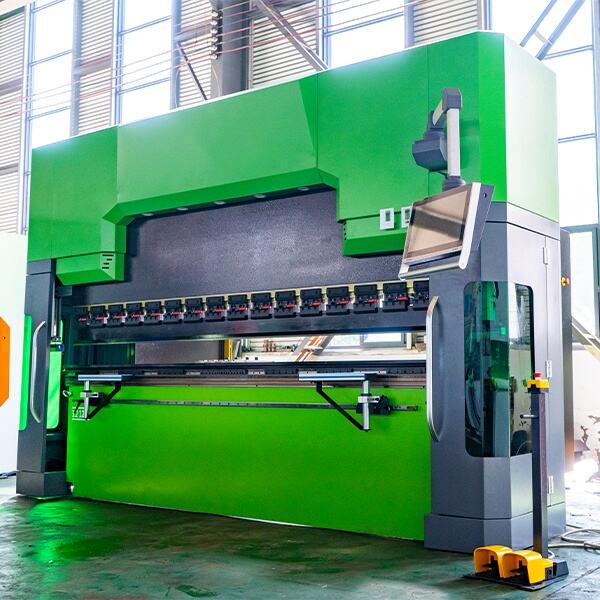
19
Sep
 EN
EN