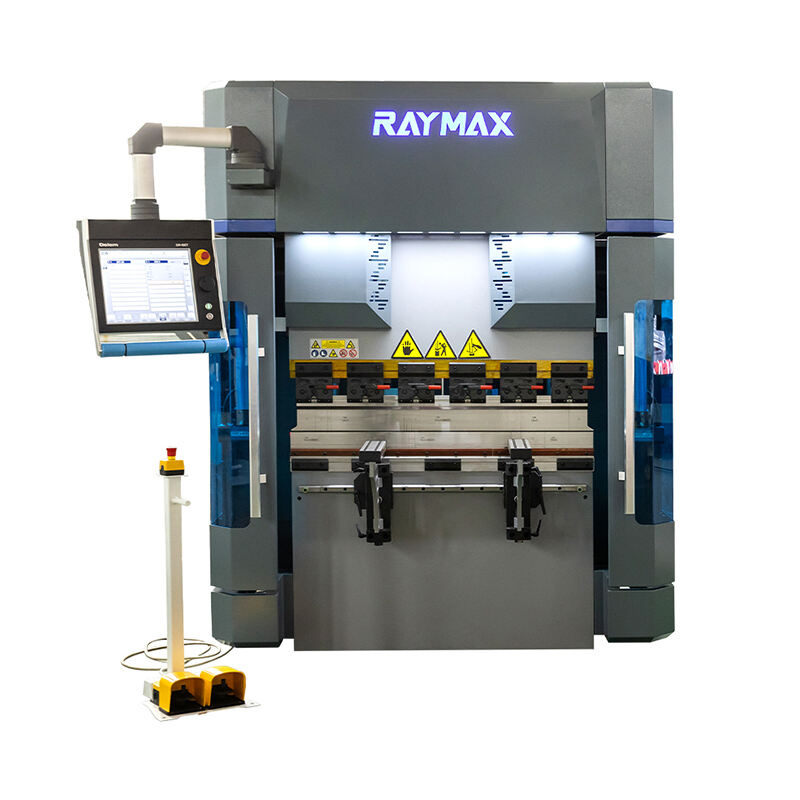
The fundamental working principle of a press brake involves clamping a metal sheet between a punch mounted on a descending ram and a die fixed to the worktable, then applying sufficient force to cause plastic deformation that results in a permanent bend. When the operator initiates a bending cycle, the ram descends at a programmable speed, bringing the punch into contact with the workpiece. As force increases beyond the material’s yield strength, the sheet begins to plastically deform, taking the shape of the punch tip and die opening. The bend angle is determined primarily by how far the punch penetrates into the die opening, with deeper penetration producing sharper angles. In air bending, the most common bending method, the material contacts only the punch tip and the two edges of the die V-opening, with no contact at the bottom of the die. This method requires less tonnage than bottom bending or coining and allows a single die set to produce a range of angles by varying ram depth. The required bending force can be calculated using the formula: tonnage equals material tensile strength multiplied by thickness squared multiplied by die width factor divided by die V-opening width. For mild steel with 450 N/mm² tensile strength, a general rule is that required tonnage per meter equals approximately 0.6 times the square of material thickness in millimeters for a V-die opening of 8 times material thickness. The press brake frame must be sufficiently rigid to resist deflection under load, with modern machines featuring all-steel welded construction and stress-relieving heat treatment to ensure long-term stability. Frames, assembly surfaces, and connection holes are machined after the welding process, ensuring perfect parallelism and positioning accuracy. Our press brakes are engineered with these fundamental principles, delivering reliable bending performance across a wide range of materials from 0.5mm sheet metal to 40mm thick steel plates. Contact us for a detailed technical explanation of press brake operation and how to optimize parameters for your specific applications.
27
Nov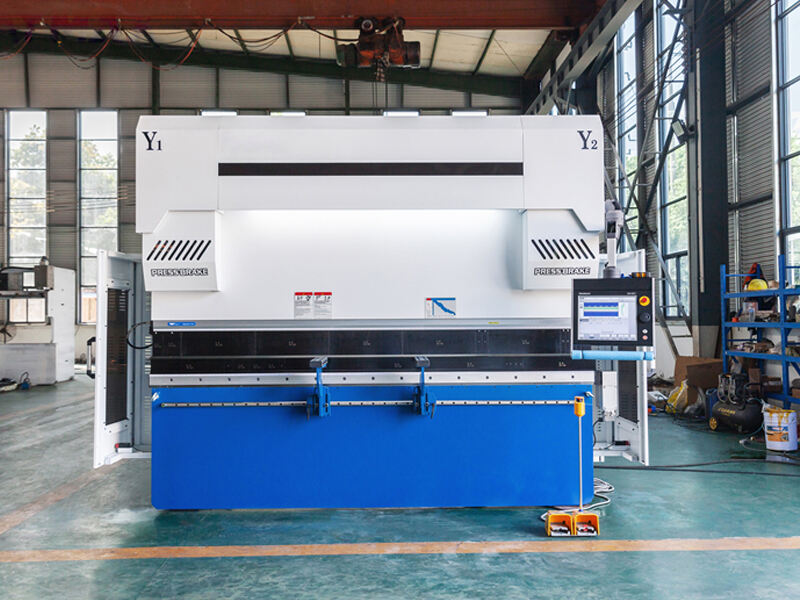
27
Nov
27
Nov
19
Sep
 EN
EN